CRAFTING NARRATIVES / MICROSOFT
You don't have to be a natural
Storytelling can feel like a skill some people just have. I wanted to make it something we could understand, practise and make our own. A consultation on one video became a four-part workshop, then a session for a much bigger room.
- Role
- Curriculum, storytelling framework, exercises and workshop facilitation.
- Audiences
- My Microsoft tribe, the WXP (XL) team and UX Day participants.
- Period
- 2025.
- Scope
- Four-part series, reusable FigJam activities and a condensed conference workshop.
TL;DR / Overview
- Starting point
- A consulting role on the MFC video opened up a broader question: how could more people build narratives with confidence?
- My contribution
- I designed and facilitated a four-part curriculum, with hands-on and take-home exercises teams could return to.
- Approach
- Connect personal style, audience preferences, memorable messages and a cohesive story.
- Reach
- A tribe series, a dedicated WXP (XL) workshop and a condensed UX Day session attended by 120+ people.
- Response
- Participants described practical takeaways, asked for materials and shared ways the content resonated.
- What followed
- Personal encouragement and an invitation to explore collaboration from Gregor Jeffrey, whose work informed the cognitive-preferences layer.
01 / FROM CONSULTING TO CURRICULUM
One story was the starting point.
Not the whole opportunity.
I began by consulting on the MFC video. But the work pointed to something bigger than that one narrative: the everyday challenge of helping an idea land with people who see it differently.
A good story can influence a decision, bring stakeholders into alignment and give a team something to carry forward. I wanted to unpack how that happens, rather than leave storytelling feeling like an elusive talent.
So I built Crafting Narratives as a four-part workshop for the tribe. Not a single presentation recipe, but a framework people could use in their own voice, for their own audience.
02 / THE FOUR LAYERS
Start with yourself.
Then think beyond yourself.
The sessions moved from the person telling the story to the people receiving it, then to the message and the way it holds together. Each layer added another decision people could make deliberately.
-
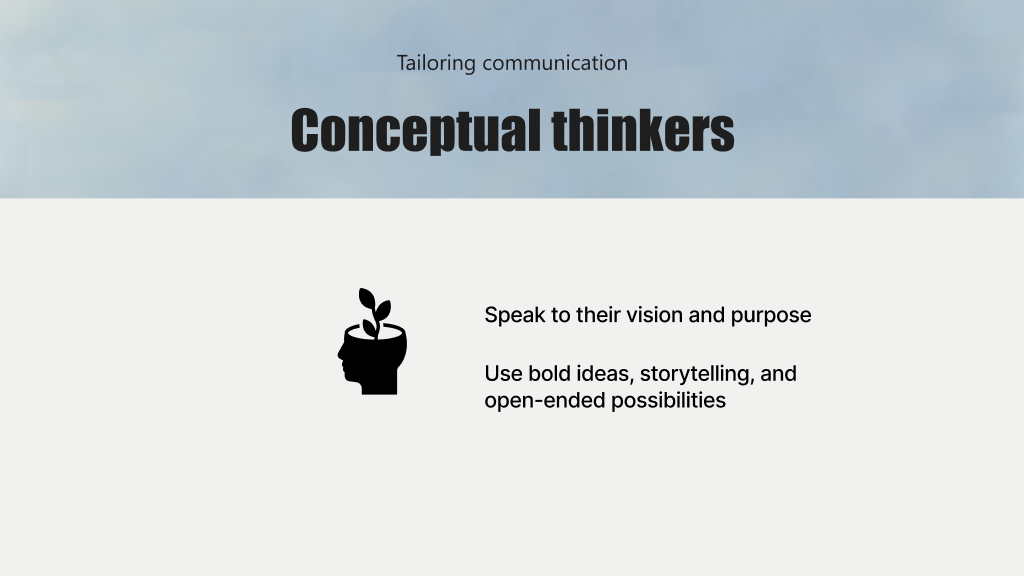
01 / Creating your signature style THE PERSON TELLING THE STORY
Sound like yourself.
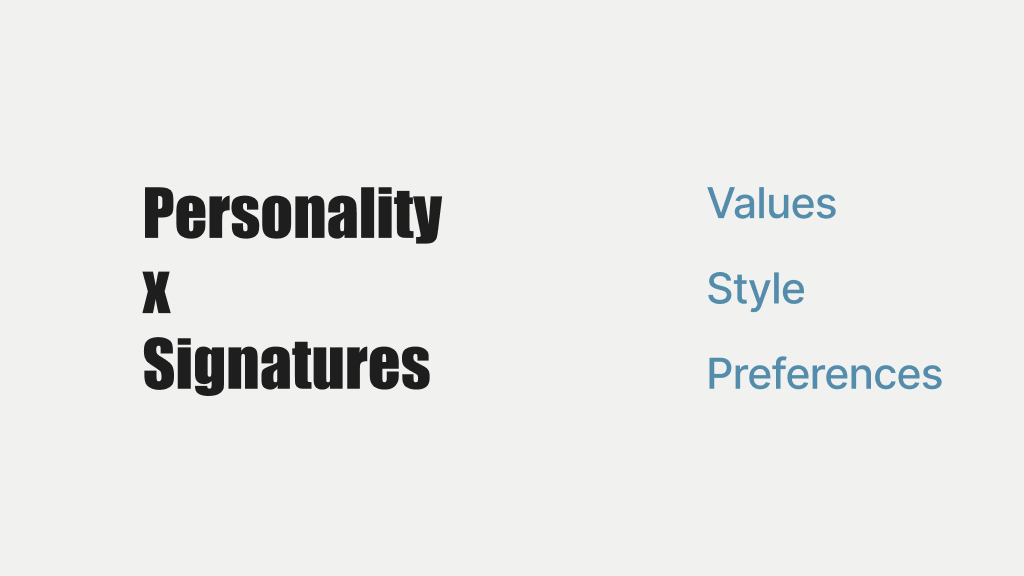
We explored how personality, values and preferences can become a signature style. The aim wasn’t to perform someone else’s version of a good storyteller, but to recognise what already feels like you.
Try it Identify three to five traits, connect them to a metaphor, then draft a two-minute introduction to a current project.
-
02 / Speak their language THE PEOPLE RECEIVING IT
The same idea.
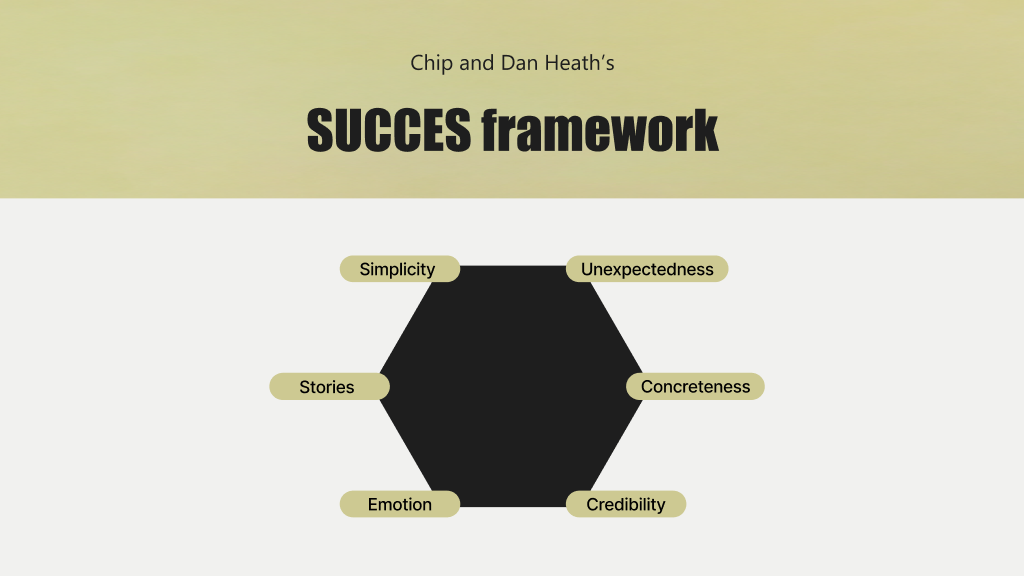
A different way in.Inspired by Gregor Jeffrey’s work, we explored conceptual, analytical and structural cognitive preferences. Would this audience need the vision, the evidence or a clear path to action?
Try it Choose two stakeholders with different preferences. Adapt a narrative for each, then consider how to address a mixed audience.
-
03 / Making it stick THE MESSAGE THEY TAKE AWAY
Make it worth remembering.
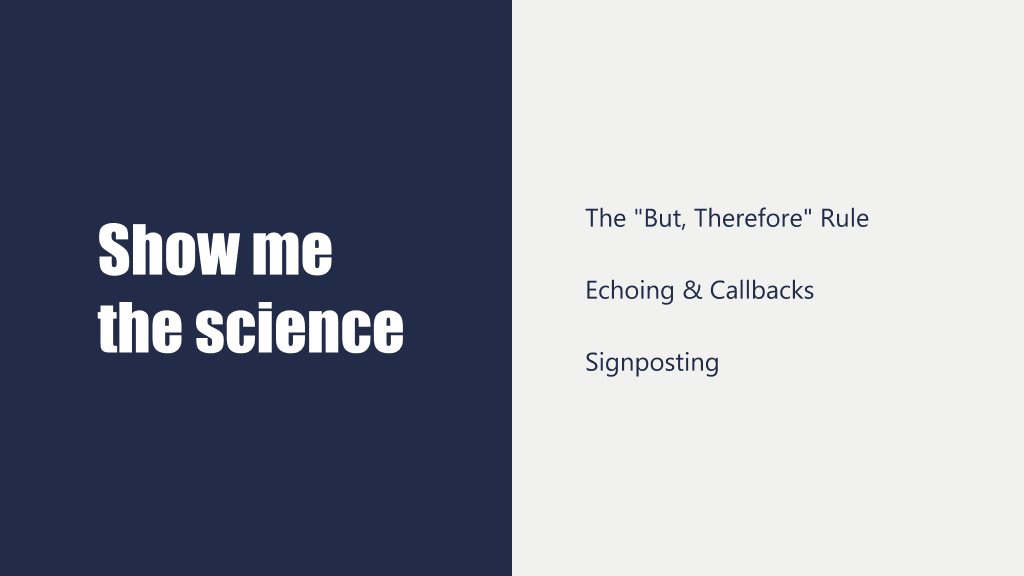
Chip and Dan Heath’s SUCCES framework gave us a way to examine the message itself: simplicity, unexpectedness, concreteness, credibility, emotion and stories.
We broke down examples to explore what makes an idea engaging and memorable, then brought that lens back to our own work. The framework is theirs; the workshop connected it to the narratives we needed to build.
-
04 / Cohesion and visuals THE THREAD THROUGH IT ALL
Make the parts feel like one story.
We brought the layers together through flow, signposting and callbacks. Visual hierarchy, pacing and ideas borrowed from film and UX helped connect one point to the next.
Try it Redesign a slide in ten minutes. Keep it to one slide, or at most two, and decide how you want the information to land.
03 / A FRAMEWORK TO RETURN TO
Not just something to hear.
Something to work with.
I paired the sessions with hands-on activities, discussion and take-home exercises. The FigJam boards turned the concepts into prompts people could revisit the next time they needed to shape a narrative.
There was room for a little AI-assisted exploration too. The point was still personal: build on your communication style, consider your audience and make conscious choices about the story.
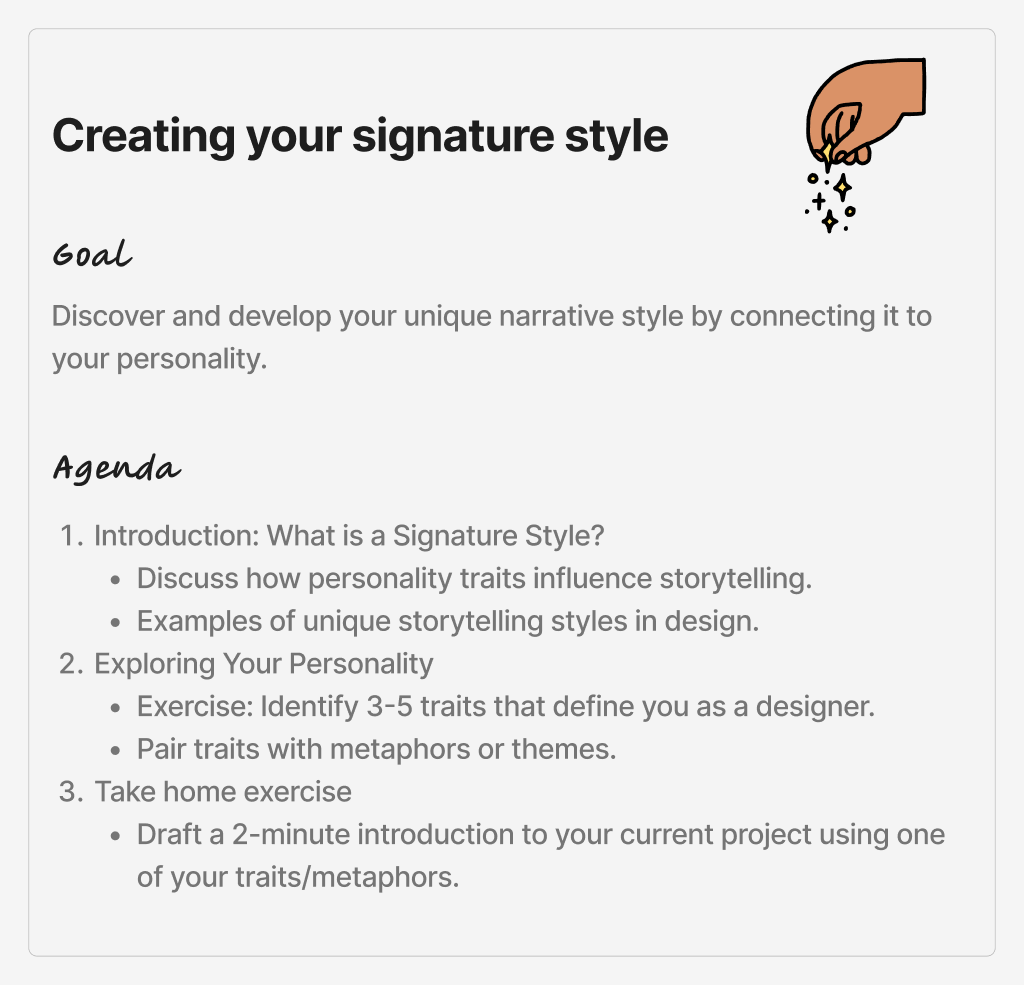
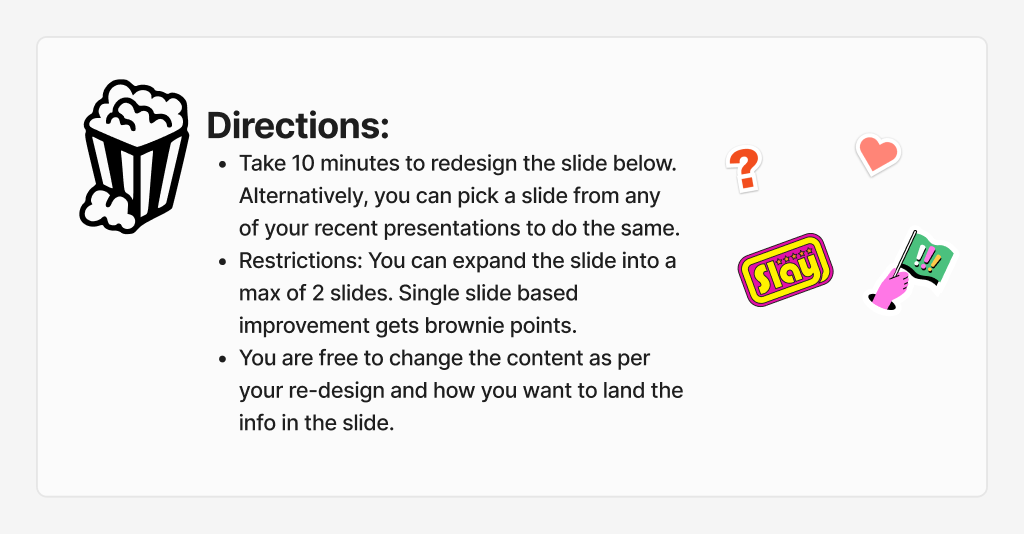
Original workshop material: the four-session deck and the exercise boards. Source files may require Figma access.
04 / TAKING IT INTO OTHER ROOMS
The framework stayed.
The room changed.
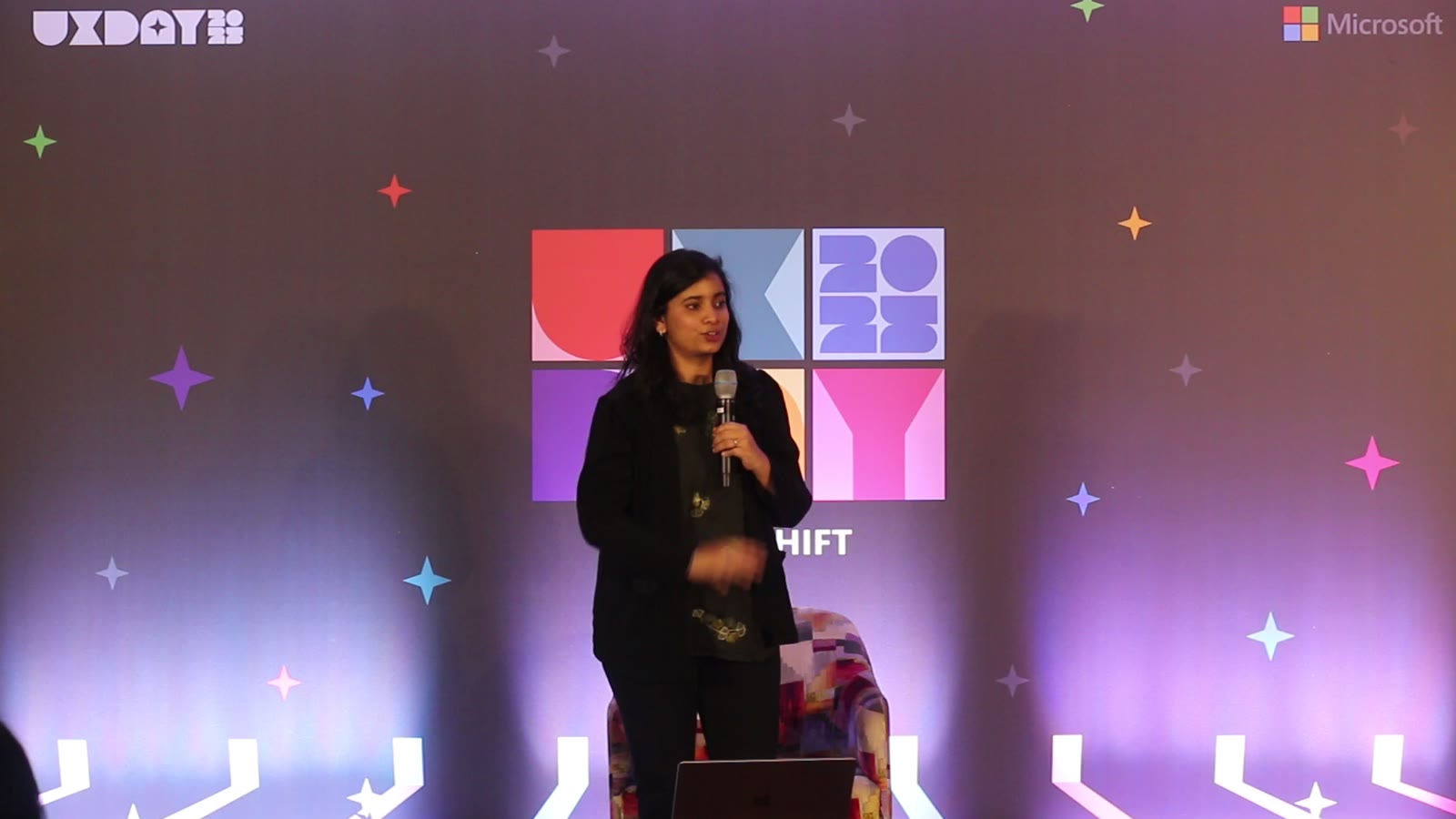
I condensed the series for Microsoft UX Day 2025, where 120+ participants joined the workshop. It was an opportunity to share a practical approach with a wider design community and represent Microsoft through the learning we were building.
I also ran a dedicated workshop for the WXP (XL) team. Participants described it as refreshing and insightful; several followed up for materials and references. For me, that follow-through mattered as much as the response in the room.
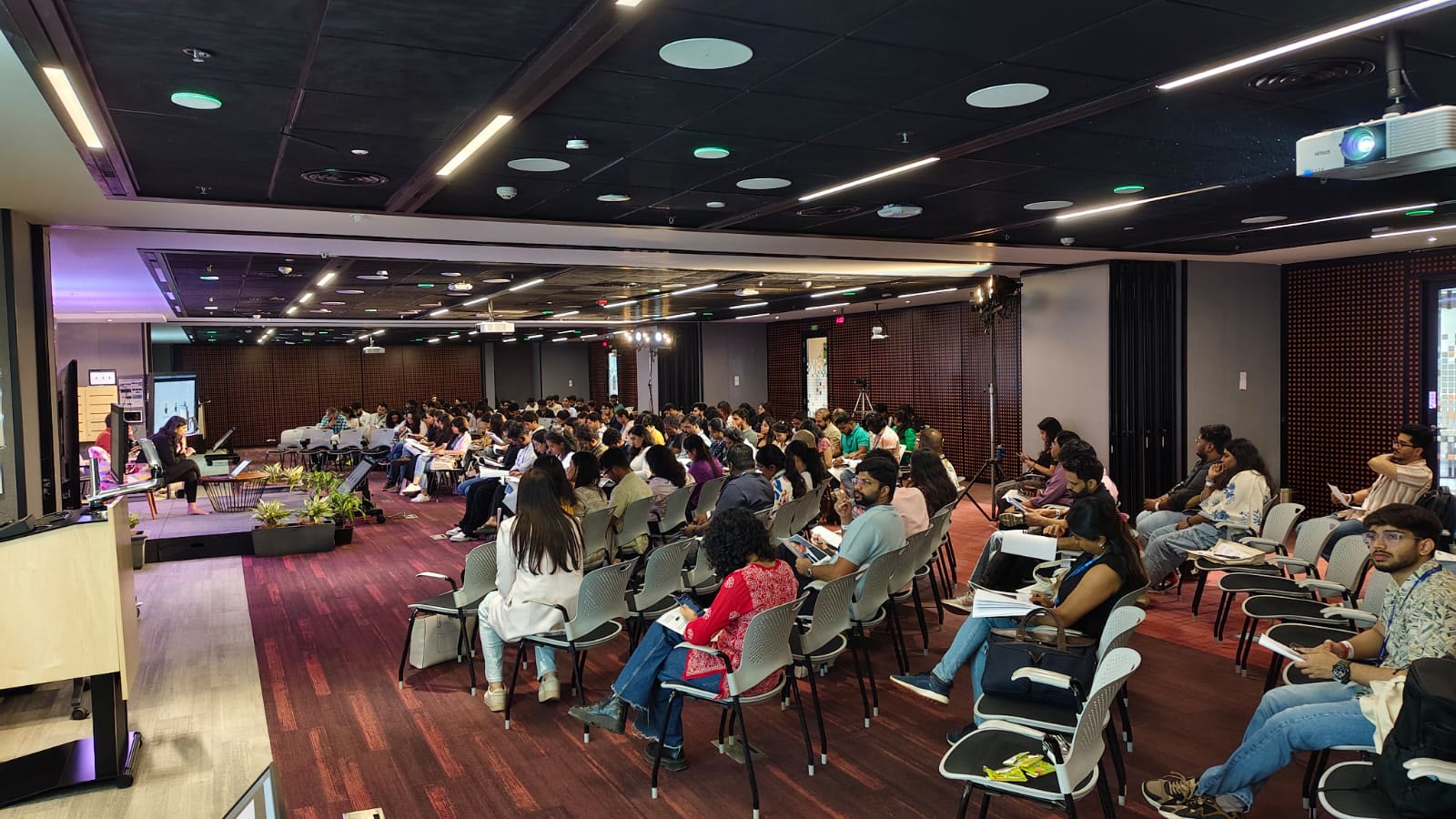
“This is not going to be a one-way session.”
For UX Day, I planned a 50–55-minute session around participation, not just a shorter deck. People had stickies, markers and printed question cards. We started with five minutes of honest reflection, then chose the three to five responses that felt most important.
From there, the session moved outwards. A small-group matching activity made cognitive preferences something to discuss, not just a theory to listen to. For a mixed audience, I brought it back to intent: what are you trying to achieve, and whose needs should lead?
The AI-assisted metaphor and tone-of-voice step was explained as something to try afterwards, rather than squeezed into the live session. Printed examples gave people a way to take it further in their own time.
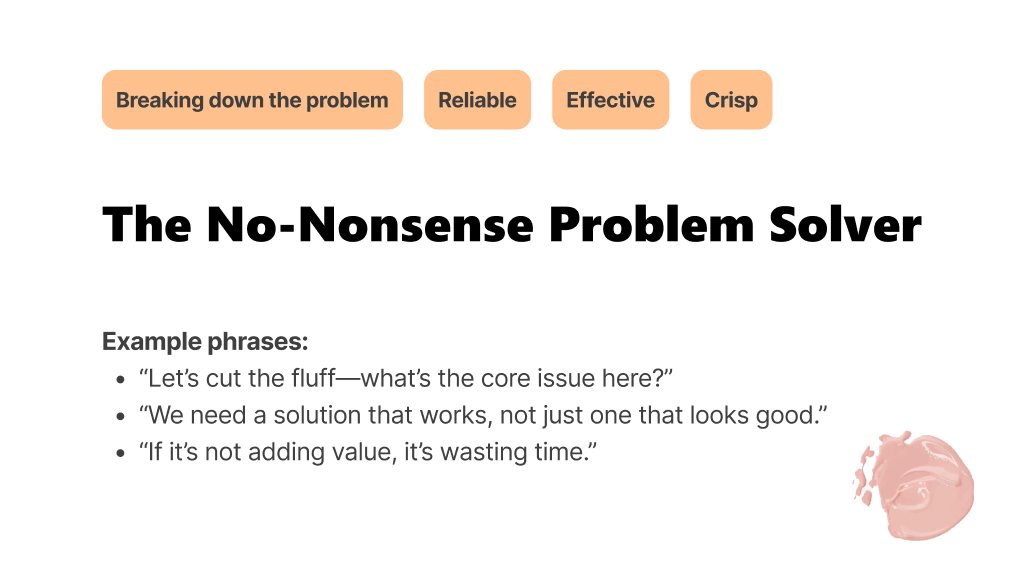
FROM THE UX DAY SCRIPT
Give the reflection somewhere to go.
Recognising a personal trait was only the first step. I showed how that could become a metaphor, then the words someone might actually use when presenting their work.
The examples were starting points, not personalities to copy. The same was true of cognitive preferences: a lens for adapting communication, not a reason to put people in fixed boxes.
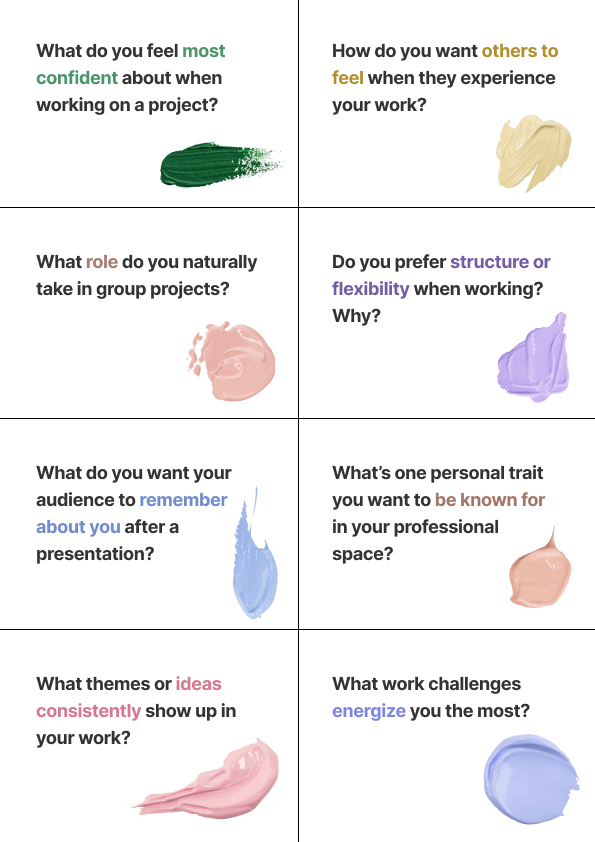
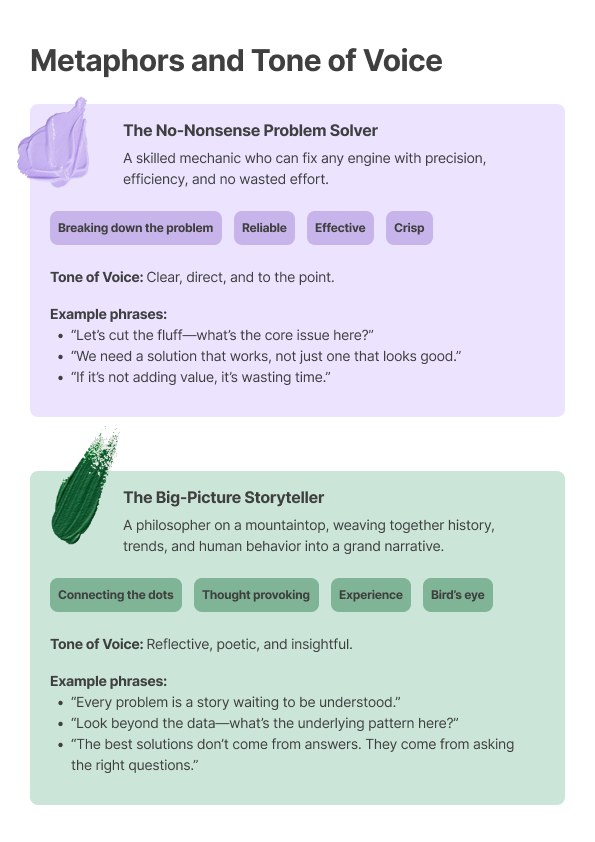
Explore the UX Day deck and printables. The session flow above is drawn from my speaker script; the images are original presentation and handout exports.
05 / WHAT CAME BACK
The part that stayed with people.
Some responses were about the session. Others were about what people wanted to do with it afterwards. These are excerpts from the messages and feedback I received, alongside the suggestions that gave me something to think about next.
Two rows, all the way across. Hover, focus or touch to pause. Swipe horizontally, or focus the cards and use the arrow keys. Unnamed responses are labelled; summary cards are not direct quotations.
Quotations are excerpts from supplied messages and survey responses. The WXP card is a summary; the two survey cards report counts. The survey also recorded agreement that the workshop was organised, relevant and met expectations. These responses describe immediate experience, not a measured change in workplace outcomes.
WHAT I’M TAKING FORWARD
A good session is a beginning.
The feedback I keep returning to isn’t only that people enjoyed the workshop. It’s that they saw a way to apply it: to pitch for a particular audience, build on their own communication style or reconsider how their work comes across.
The constructive responses matter too. People wanted more hands-on practice, but a complete presentation could be too much to fit around their work. That leaves me with a useful design question for the next version: how small can an exercise be and still help someone put the framework to work?
Gregor Jeffrey also reached out with personal encouragement about applying cognitive preferences to UX and an invitation to collaborate. We’re exploring possibilities, not announcing a finished collaboration.
I started by helping with one story.
I ended up helping more people find their way into their own.
KEEP EXPLORING