Keep the markings visible.
The added material needed to be transparent so it would not hide the scale on the barrel.
Some interactions could not load. The story and full-size image links are still available.
SYRINGE ERGONOMICS / FRUGAL INNOVATION
I explored an extra grip point on a syringe barrel. The starting point was not the needle, but the hands trying to hold it steady.
01 / CHANGING THE LENS
Needles are often discussed from the patient’s side. I focused on practitioners using syringes repeatedly, and the small physical demands.
I mapped object handling alongside patient interaction, separating the syringe’s mechanical demands from the wider clinical task.
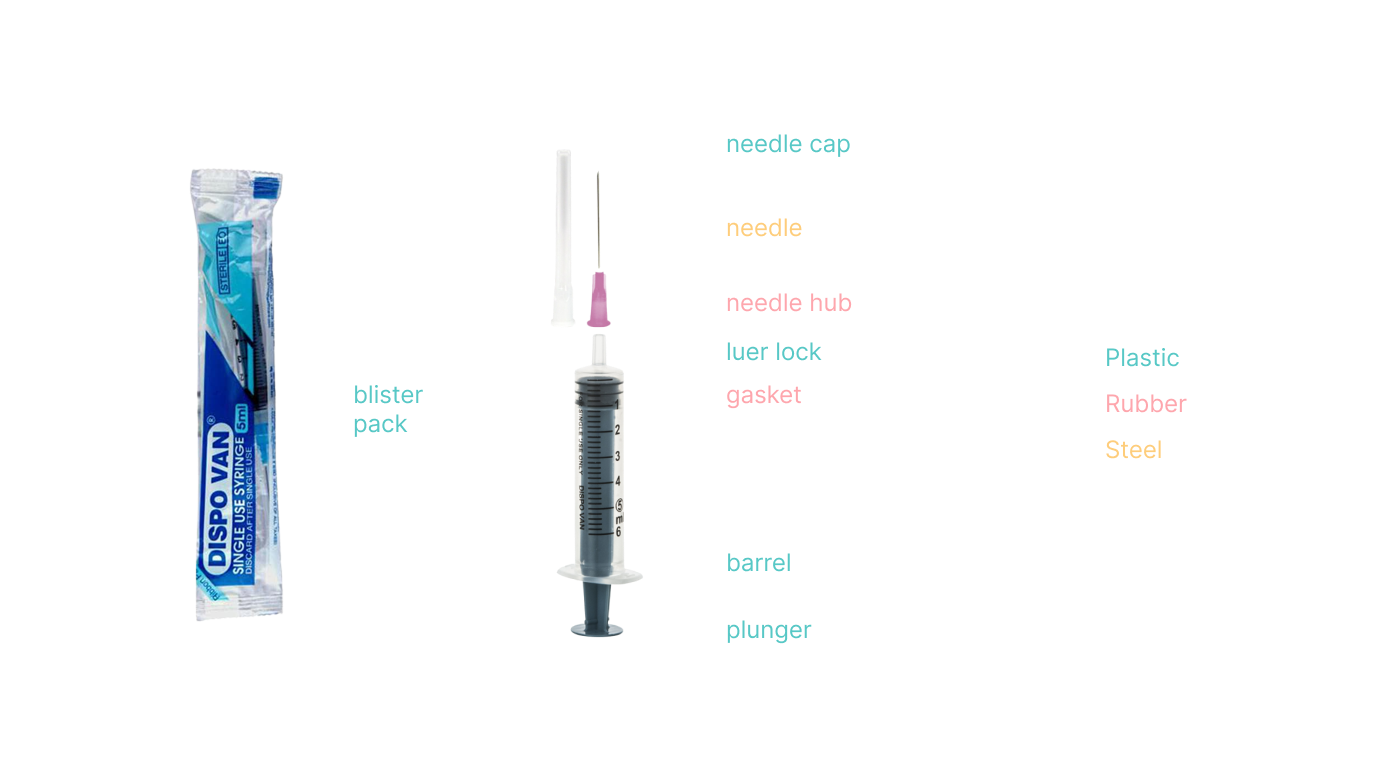
Then I looked at the object itself. The barrel, plunger, gasket, needle, connector and packaging each have a purpose, with different materials and manufacturing requirements.
The syringe was already a minimal, modular design. I wanted a small intervention for a specific difficulty, not novelty for its own sake.
The material research also made the constraints clear. Transparency, compatibility, sterility and legibility are not cosmetic details in a healthcare object.

02 / FINDING THE PROBLEM
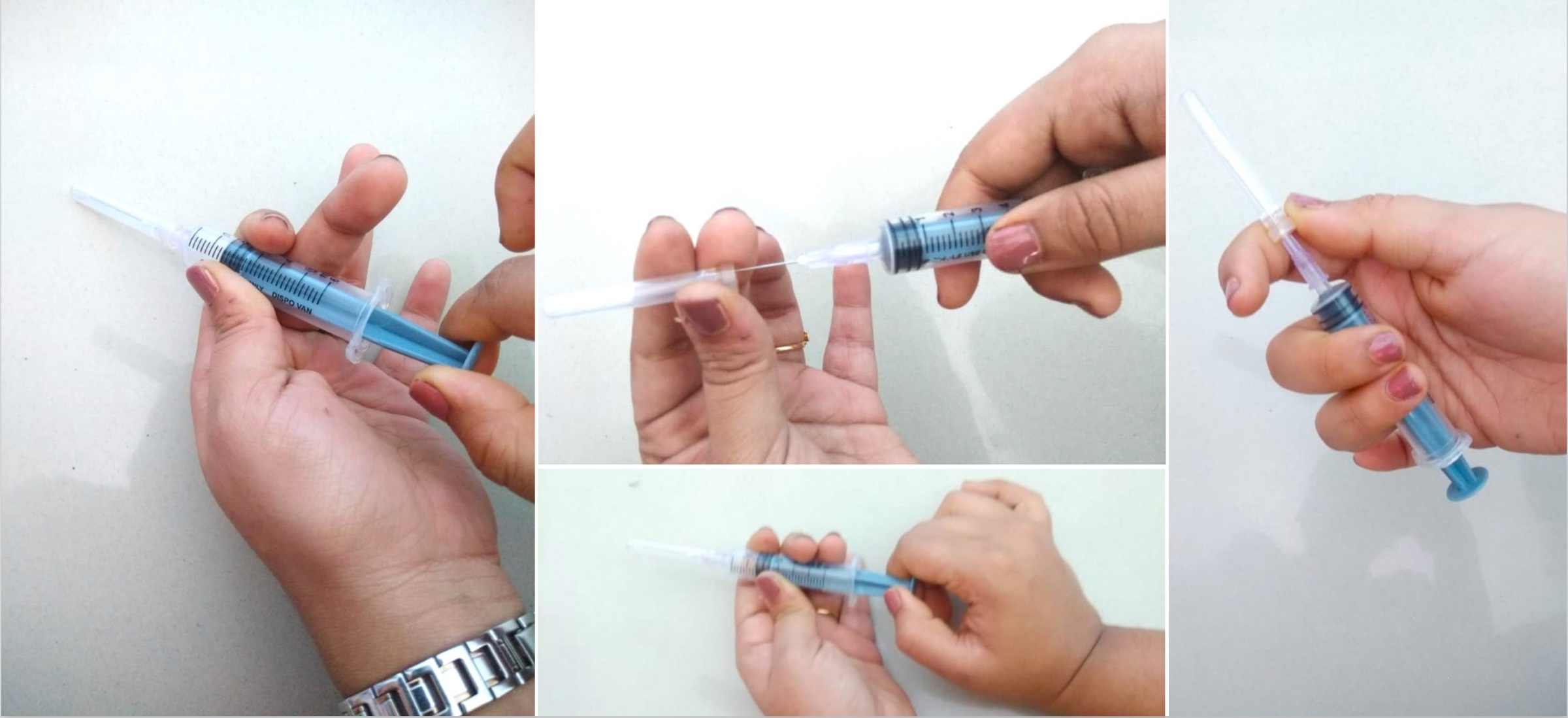
Shadowing, observation and contextual inquiry brought two difficulties into focus: finding a viable vein and maintaining grip while pulling the plunger.
Hands could slip towards the barrel’s connector as the plunger moved the opposite way, making the syringe harder to hold steady.
I reviewed existing vein-location work, including infrared approaches. With other solutions already being explored, I chose the more specific ergonomic issue of slippage.
To understand the grip rather than guess at it, I recorded the action and used a handprinting exercise to identify the contact and slip areas.
I looked at both bare and gloved hands. The prints gave me a visual reference to return to after making a prototype.


03 / A FRUGAL INTERVENTION
My brainstorming marker offered an analogy: pens add grip where fingers need it. Could a syringe barrel offer a similarly deliberate contact point?
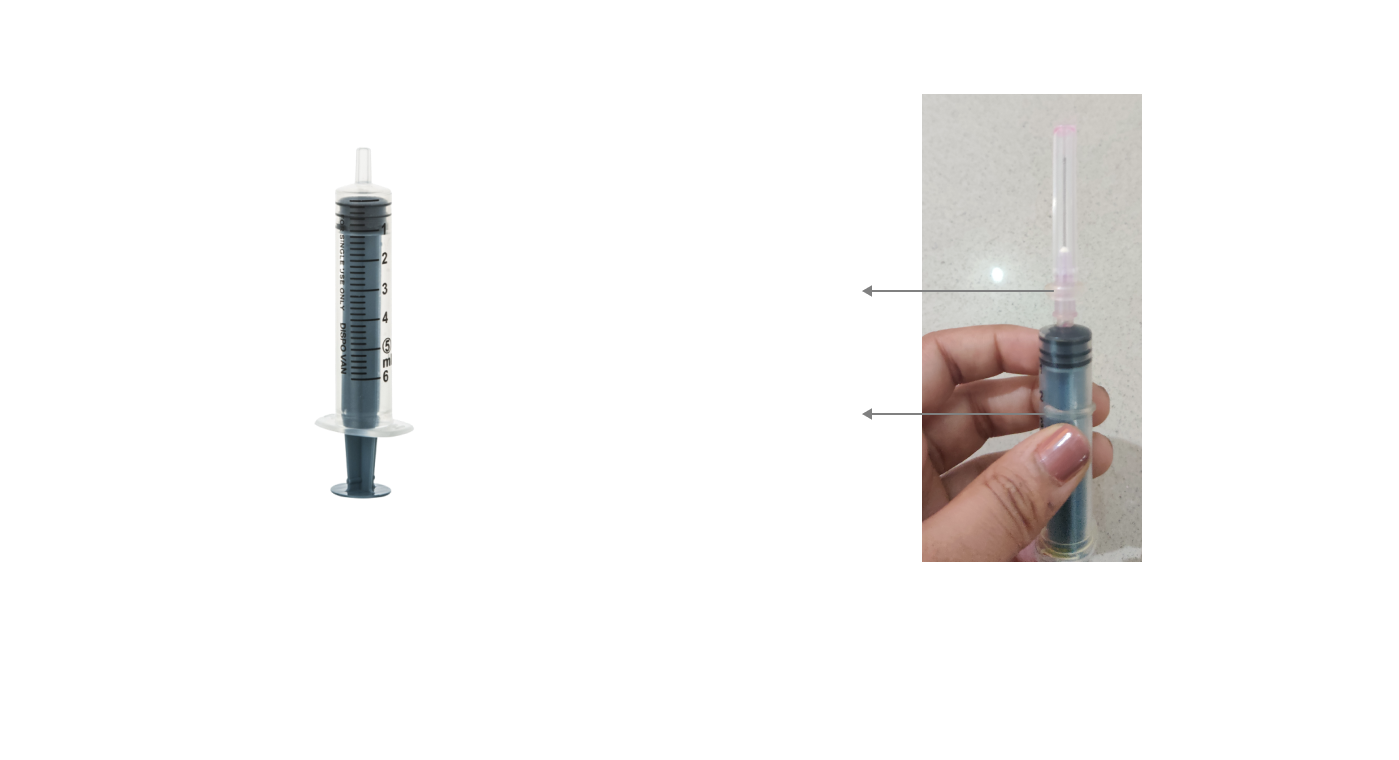
The added material needed to be transparent so it would not hide the scale on the barrel.
Placement had to avoid making the markings harder to read through parallax.
The extra grip needed to be reachable across hand sizes, within the object’s existing use constraints.
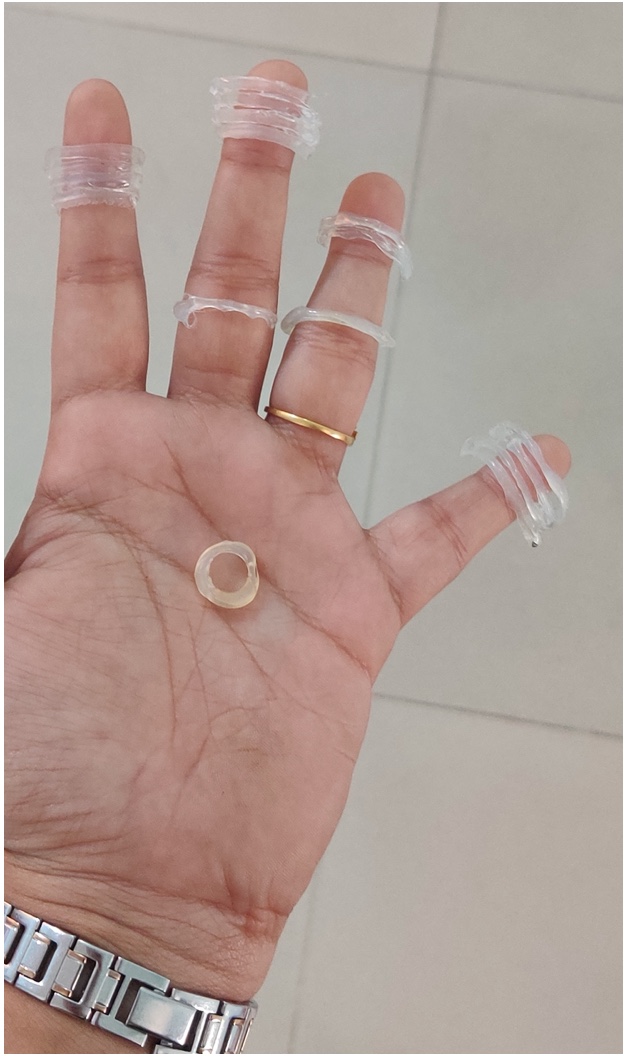
I chose ethylene-vinyl acetate, or EVA, for transparency and flexibility. After trying different ring sizes and quantities, I settled on one carefully positioned barrel ring.
The aim was a small, low-cost addition that suited the hand rather than asking the hand to compensate for the object.
The comparison photograph also shows extra cap grip; the main inquiry stayed with the barrel.
Medical-grade suitability, compatibility, sterility and comparative production cost were not established.
04 / RETURNING TO THE HAND
I repeated the handprinting with the grip, then overlaid the new prints on the originals to compare the intervention.

Smaller highlighted finger areas in the overlays suggested reduced slippage, giving me more to judge than appearance.
The red print is the earlier layer, without the intervention. The highlighted regions mark the areas being compared.
The comparison was visual, without measured slip distance or grip force.
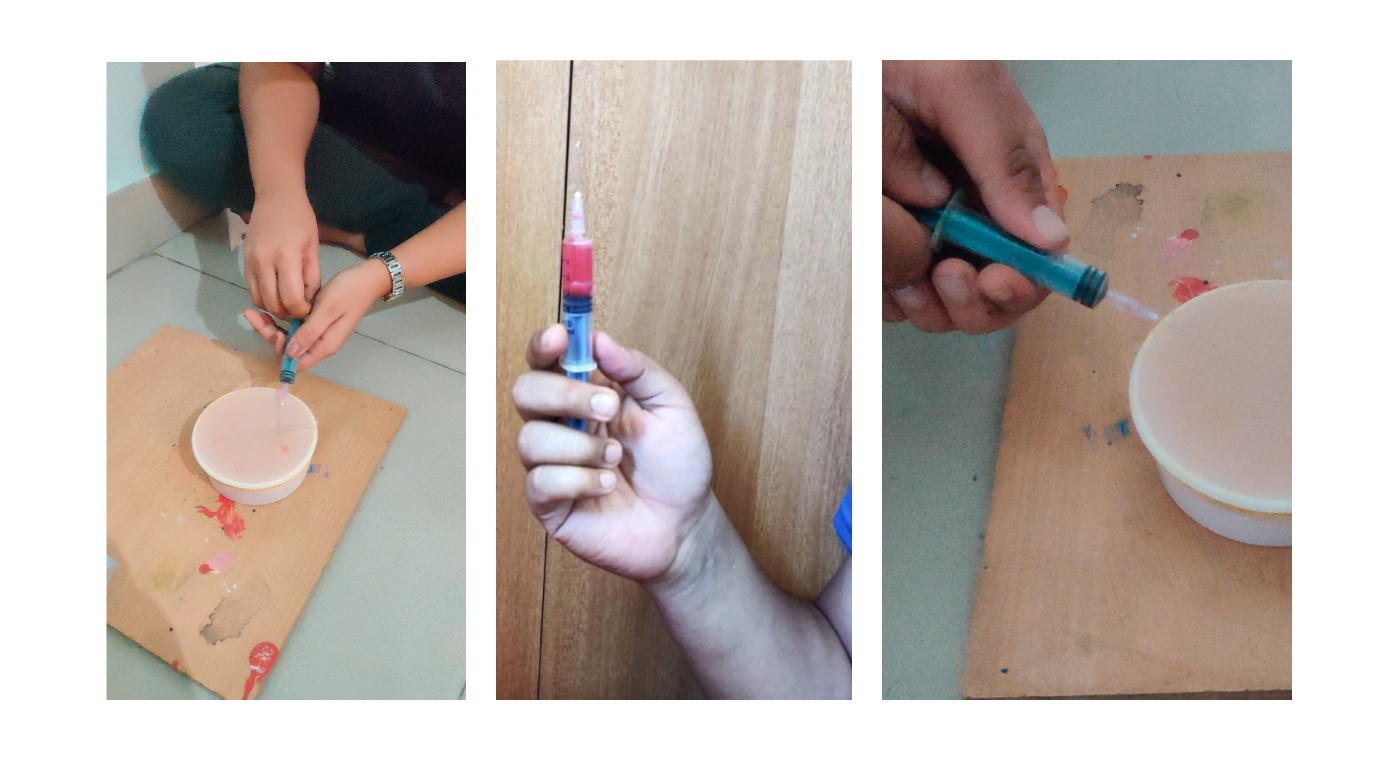
After a low-fidelity bench simulation, I returned to the original medical interns, phlebotomists and nurses for further testing.
The early trials were encouraging. Returning to the same group connected the proposed change to the people who had helped identify the problem.
The records describe the intervention as a successful frugal exploration, but do not give trial counts, a formal test protocol, numerical performance results or safety outcomes.
Detailed testing and analysis were still needed before manufacture or clinical use.
05 / AN ADJACENT QUESTION
The grip study opened a second, more speculative direction: changing the mechanism rather than adding to it.
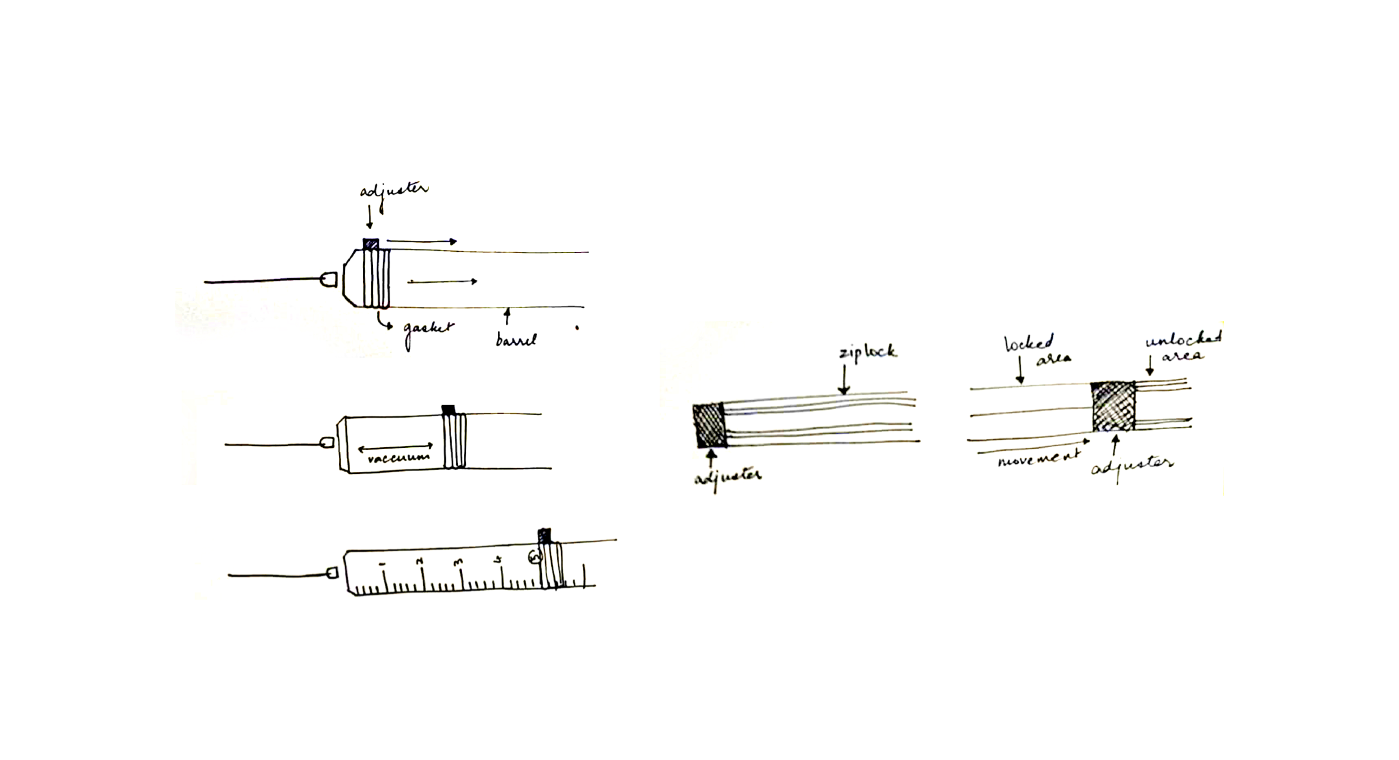
I sketched a concept that replaced the conventional plunger with an adjustable, vacuum-based arrangement using a zip-lock idea along the barrel.
The intent was to explore less movement during use and a different way of setting volume. Lower material use and steadier handling were proposed advantages, not measured outcomes.
This remained an adjacent concept. It was separate from the transparent grip-ring prototype.
Narrowing the work was the hard part. Observation revealed an overlooked difficulty; a modest physical change gave me something specific to compare and test.
OTHER QUESTIONS IN HEALTHCARE