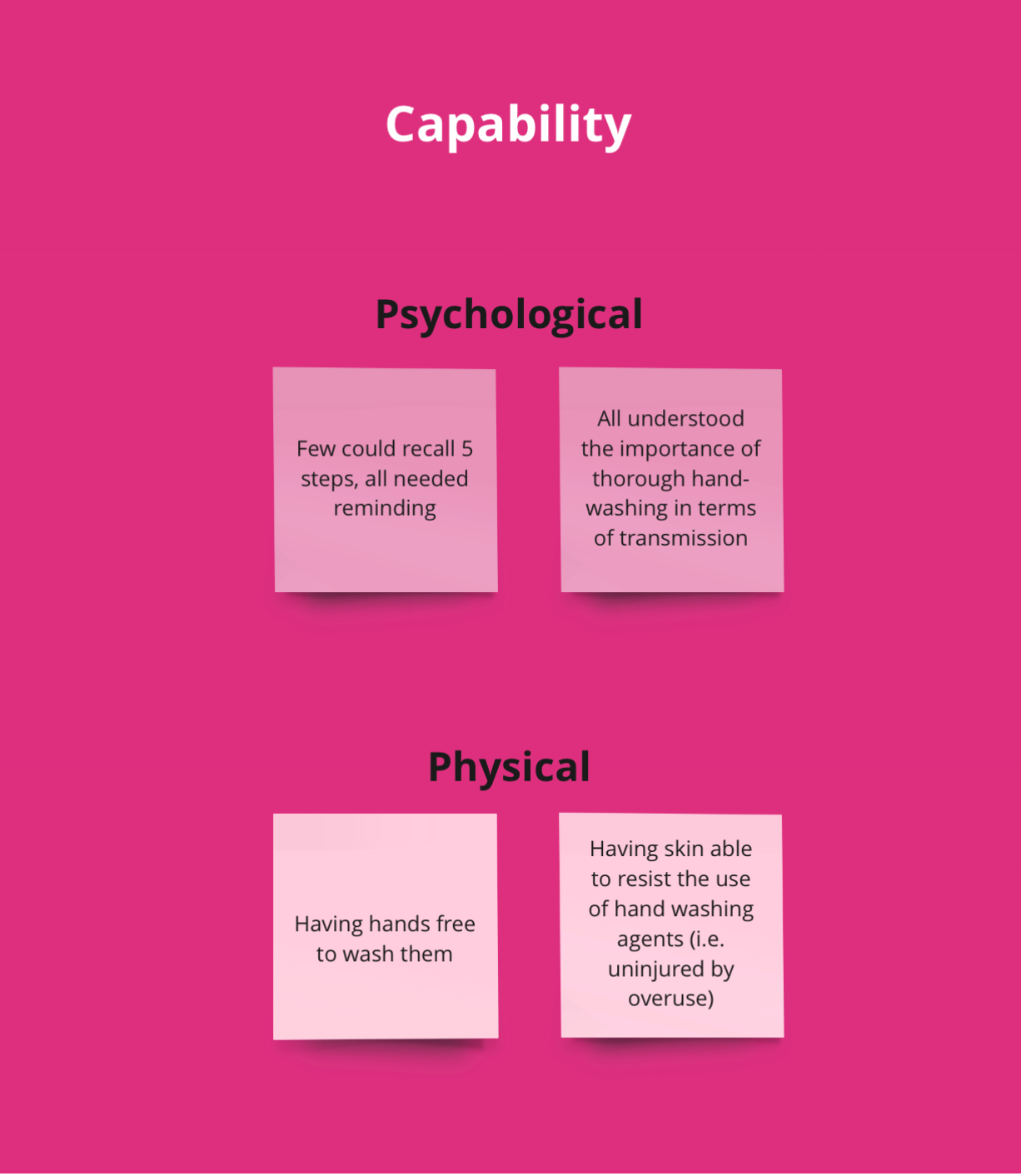
CAPABILITY
Knowing why was not enough.
People understood the importance of hygiene, but recall still needed support. Free hands and skin irritation also affected the physical act.
Some interactions could not load. The story and full-size image links are still available.
BEHAVIOUR CHANGE / HAND HYGIENE
I explored hand hygiene during radiographers’ movement between wards. Research and co-creation led to a concept with reminders, sanitiser and feedback on the X-ray cart.
01 / THE MOMENT BETWEEN WARDS
During COVID-19, radiographers moved between departments and patients with mobile imaging equipment. I focused on a specific moment in that journey: entering a new ward.
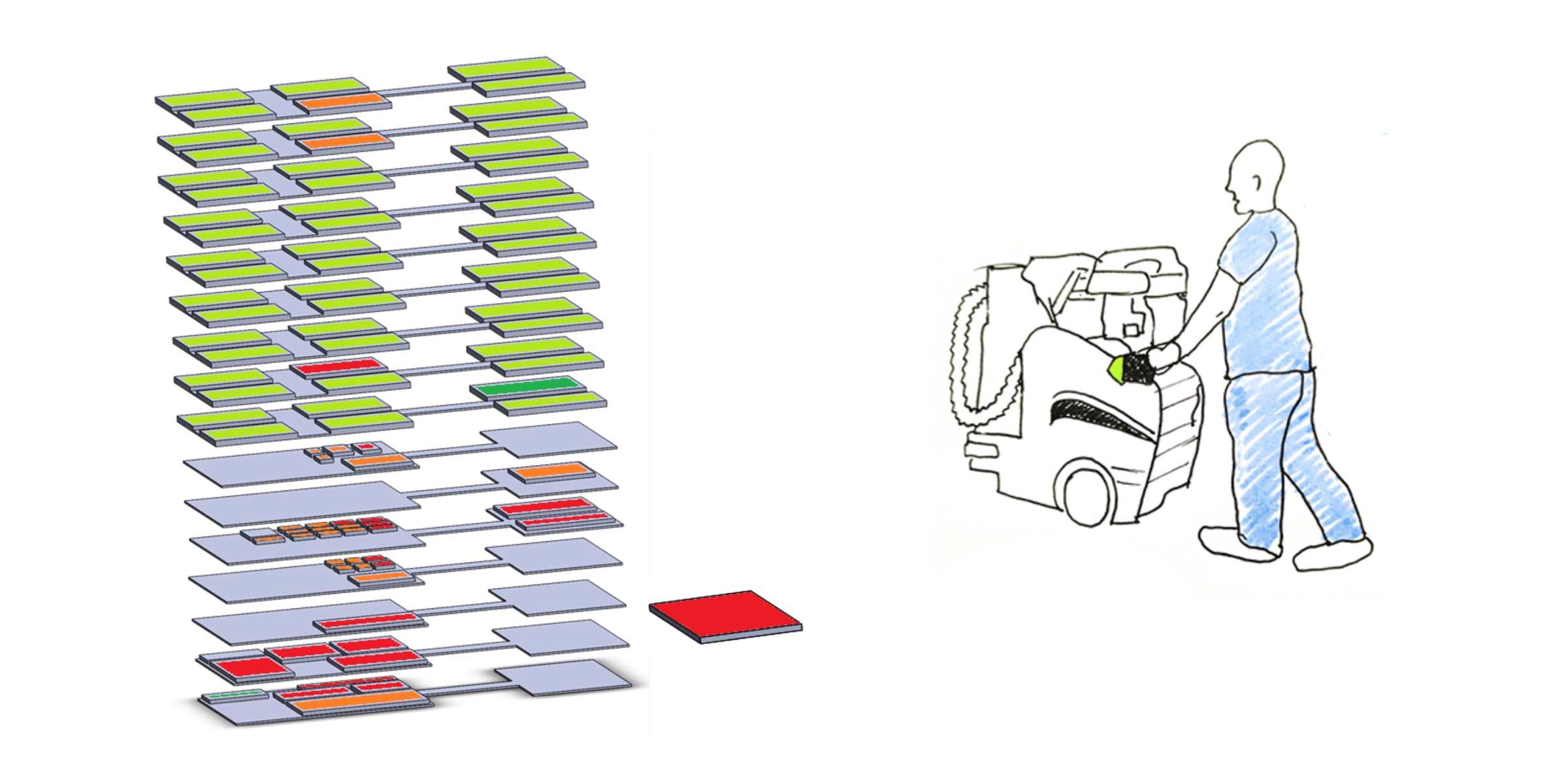
The movement illustration for more than 80 imaging staff at The Royal London Hospital helped show how connected the hospital was through everyday work.
Why was hygiene missed at these transitions despite its known importance? I looked at the conditions around behaviour, not simply telling people to try harder.
The 80+ figure describes staff movement, not my interview sample or a concept outcome.
02 / LOOKING AT THE SETTING
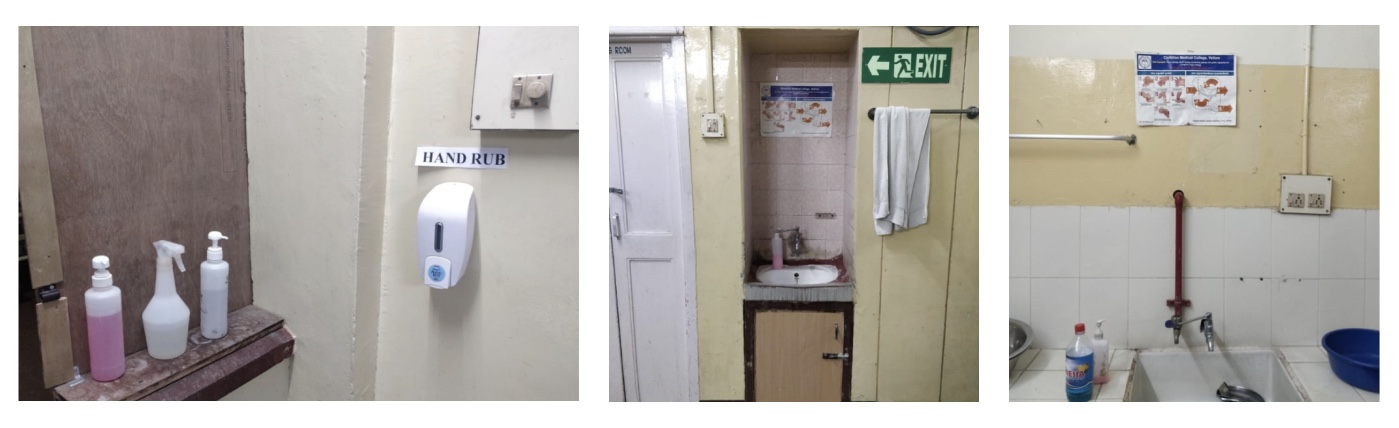
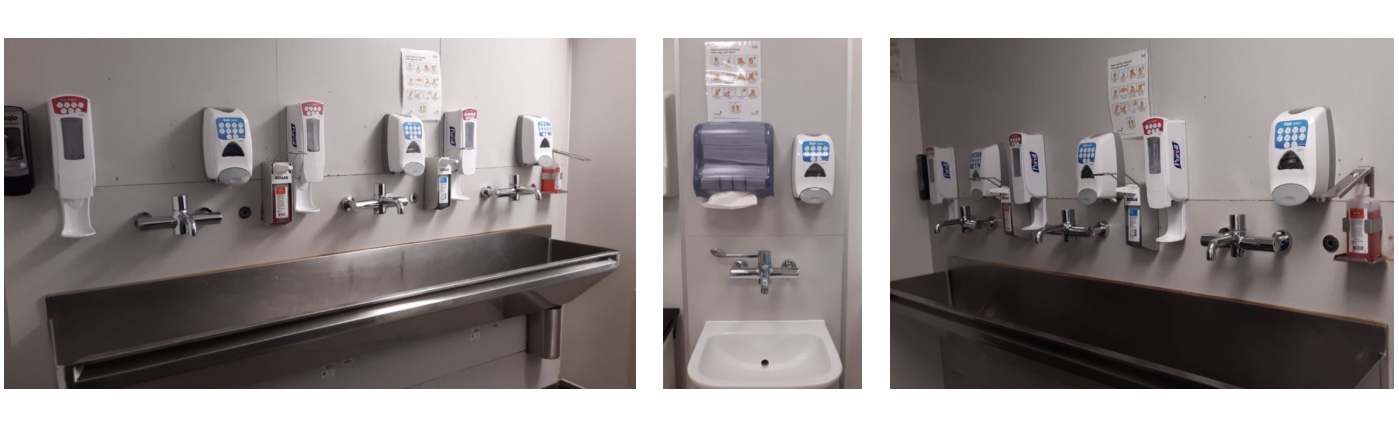
I compared hand-hygiene arrangements in India and the UK, then interviewed radiographers about the moments when the behaviour did and did not happen.
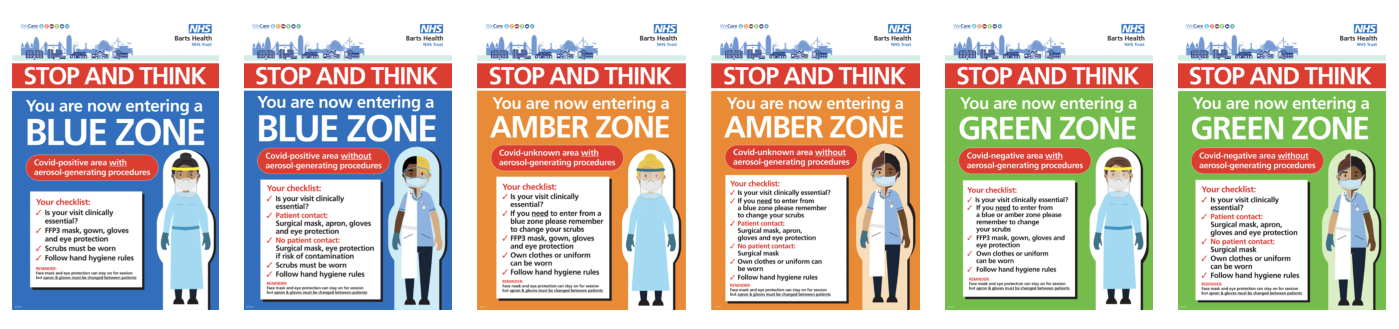
The hospital examples were Christian Medical College Hospital in Vellore and The Royal London Hospital. Both displayed hand-hygiene protocols, including the WHO’s five moments.
Station placement, drying materials and signage differed. The UK setting also used posters for COVID-19 zone protocols; wall reminders were only part of the environment.
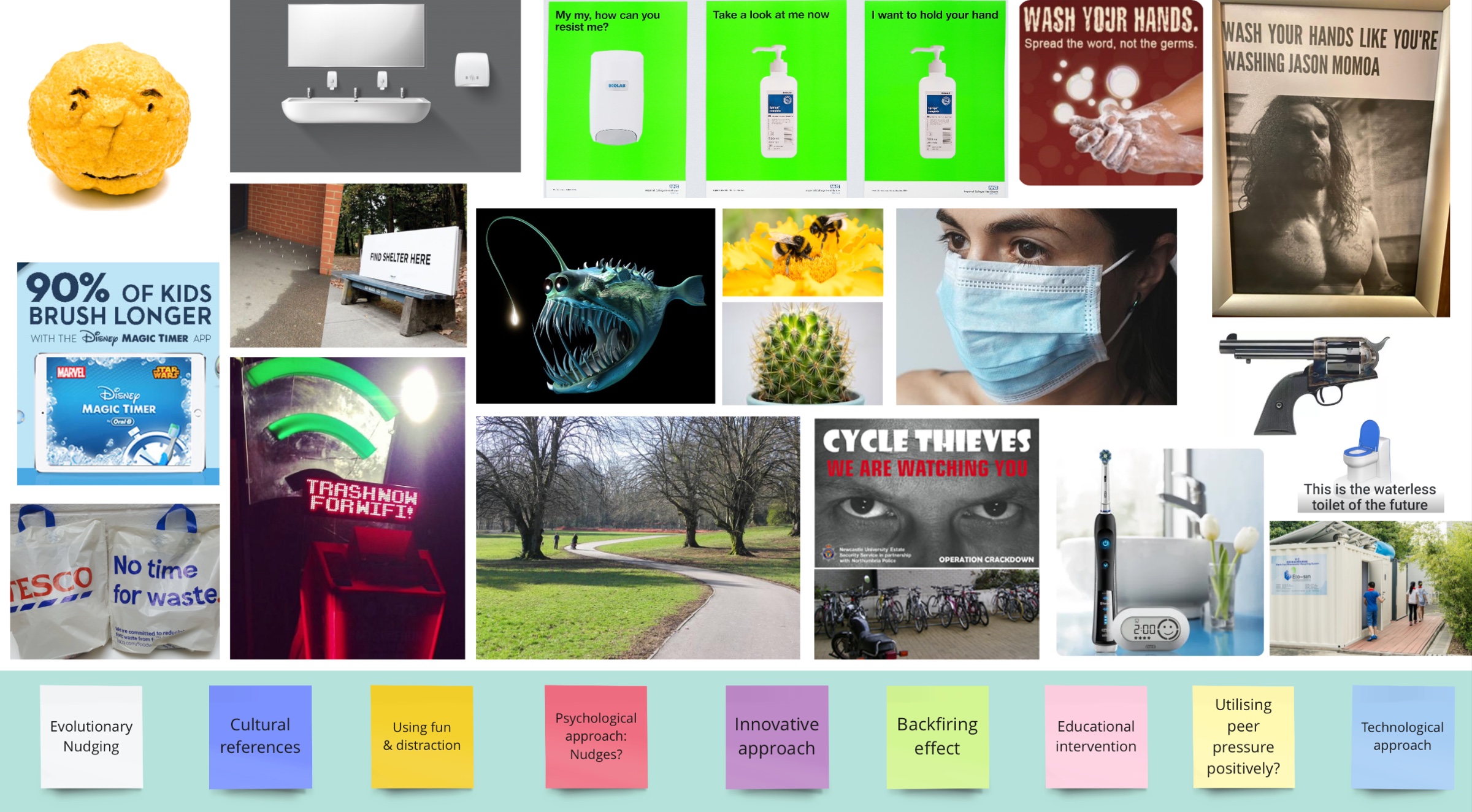
I also reviewed examples of hand-hygiene stations beyond hospitals to understand different ways of attracting attention and encouraging use.
I interviewed 8 radiographers: 1 in India and 7 in the UK. Five reported incomplete awareness of, or inconsistent adherence to, the five moments.
Cleaning after patient contact or when soiled was more familiar than sanitising on entry to a department.
These self-reports were not observed adherence rates for either hospital or country.
I used AACTT: Action, Actor, Context, Target and Time to replace a broad “improve handwashing” brief with a specific transition, person and response window.
The 20-second window was a concept response target, not clinical guidance on hand-hygiene duration or method.
I organised interview findings with COM-B: Capability, Opportunity and Motivation. Not every missed action was a knowledge problem.
People understood the importance of hygiene, but recall still needed support. Free hands and skin irritation also affected the physical act.
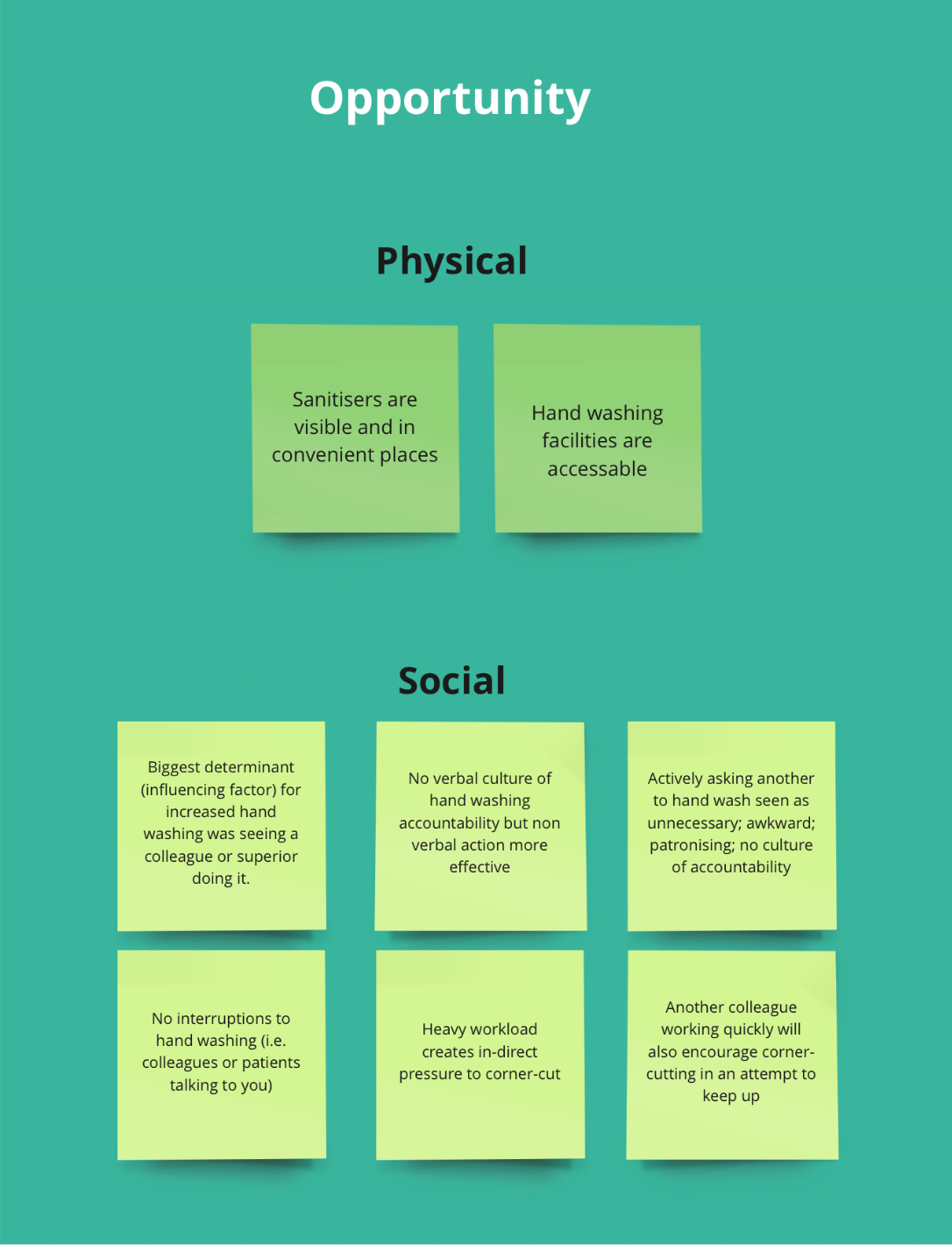
Facilities existed, but workload and interruptions competed for attention. Seeing a colleague act could help; verbally reminding one could feel awkward.
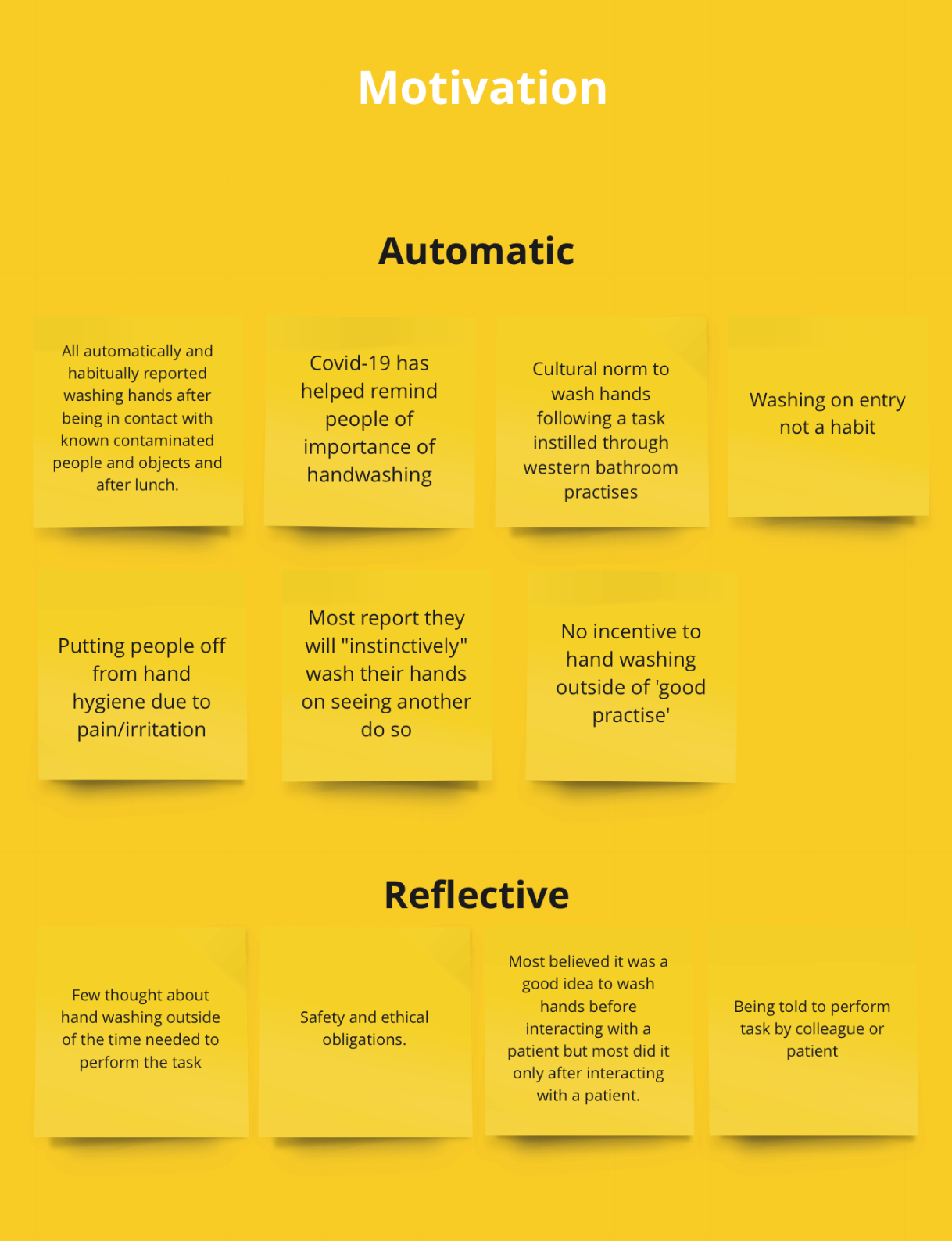
Cleaning after contact was an established habit. Cleaning on entry was not. Safety mattered, but did not always translate into the action at that moment.
Busyness, distraction, inconvenient station placement and an “after the task” habit mattered, with little routine accountability at ward entry.
Hygiene was recognised as safe practice. Peer behaviour, humour, friendly competition and small rewards could work with the team’s culture.
03 / DESIGNING WITH THE TEAM
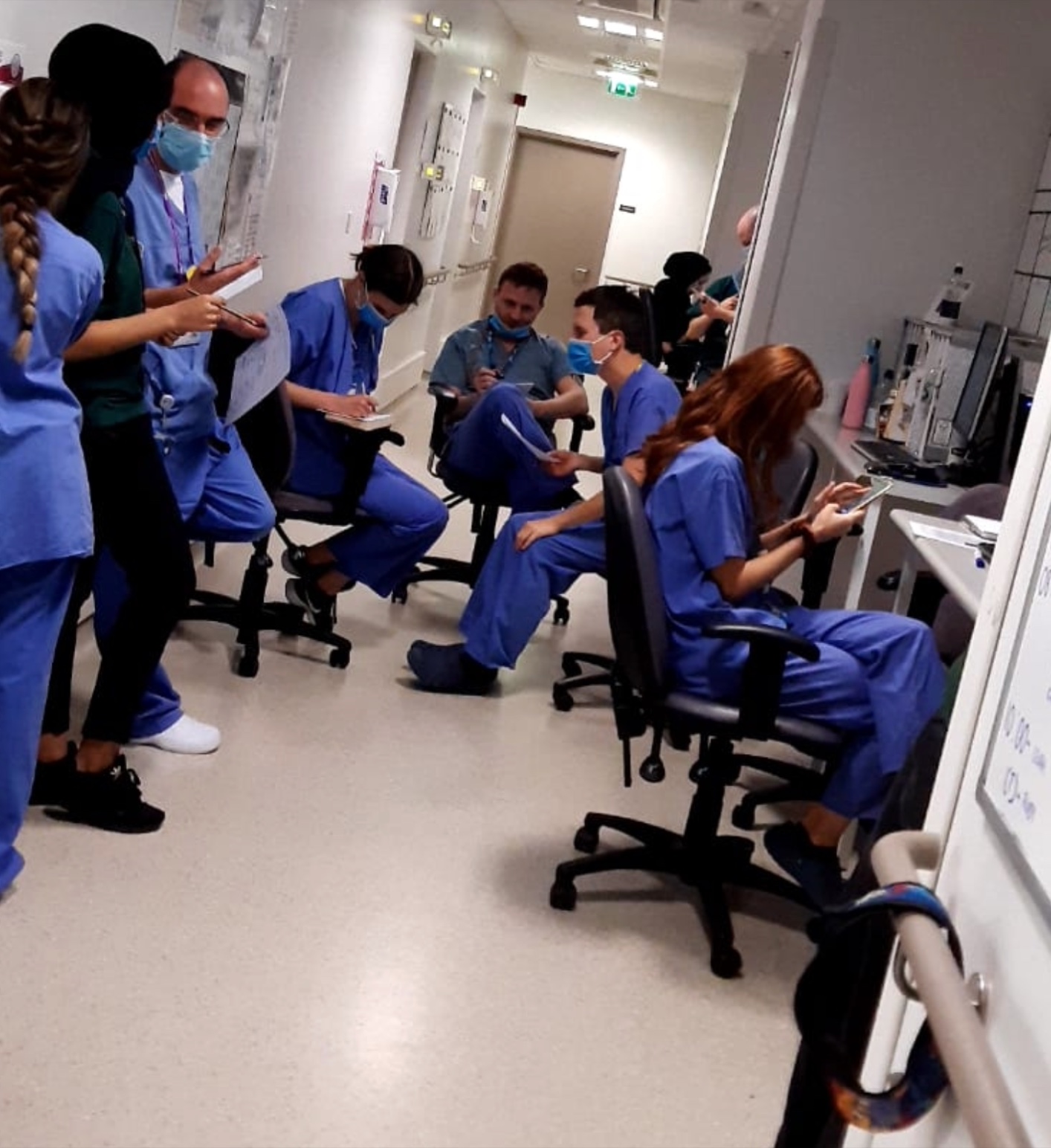
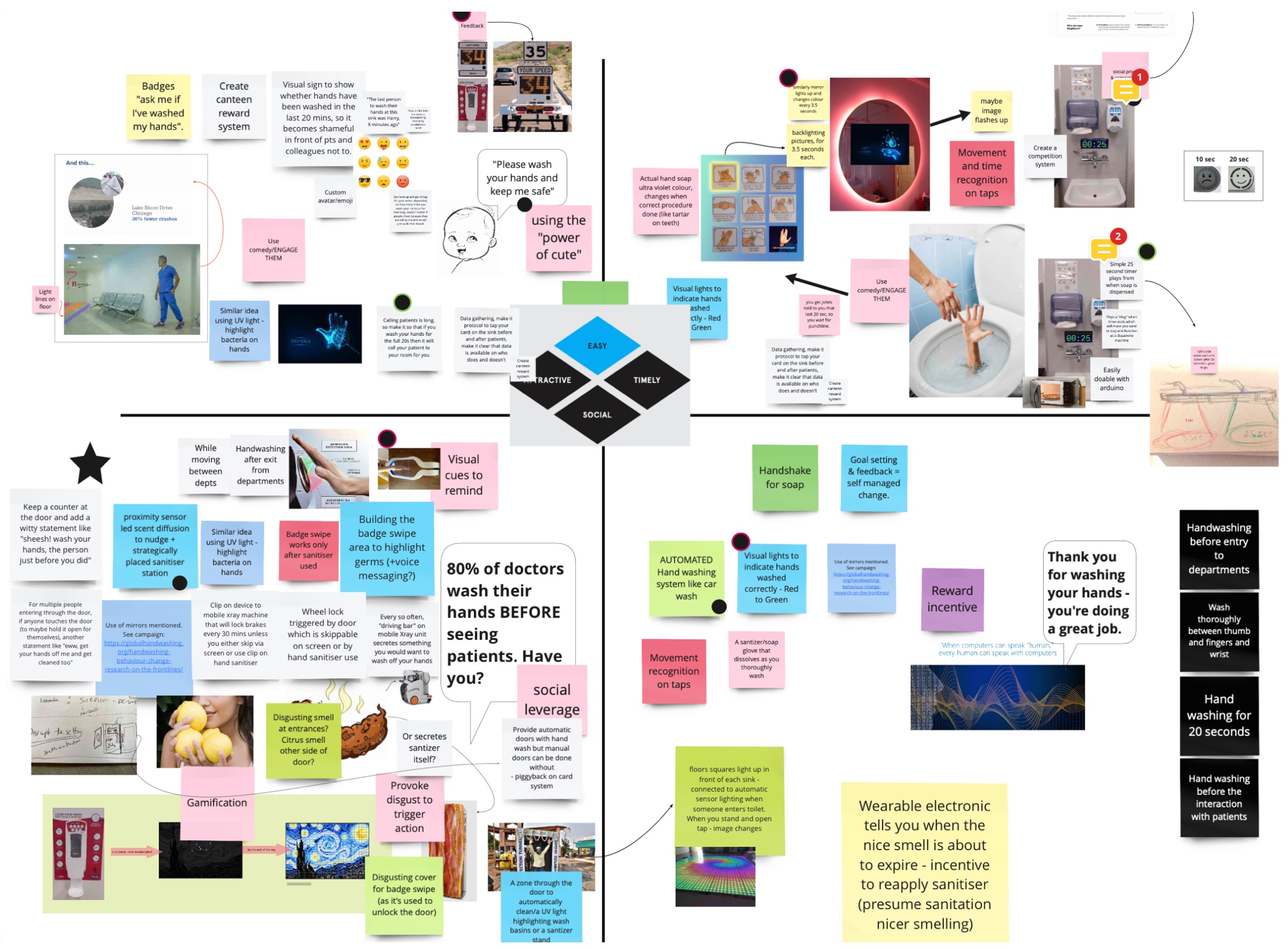
A workshop with 7 radiographers brought end users into idea-making, rather than only evaluating a finished proposal.
Their expectations and ideas drew on backstage rituals: games, competition, humour and buying coffee.
I combined workshop ideas with interviews. Playful cues and rewards needed to fit that culture, not impose another instruction.
I also studied analogous examples of behaviour change, then used whiteboarding and dot voting to narrow the concepts.
Ideas included door prompts, interactive washing-station feedback and rewards. I prioritised less cognitive load, familiar routines and fewer obstacles.
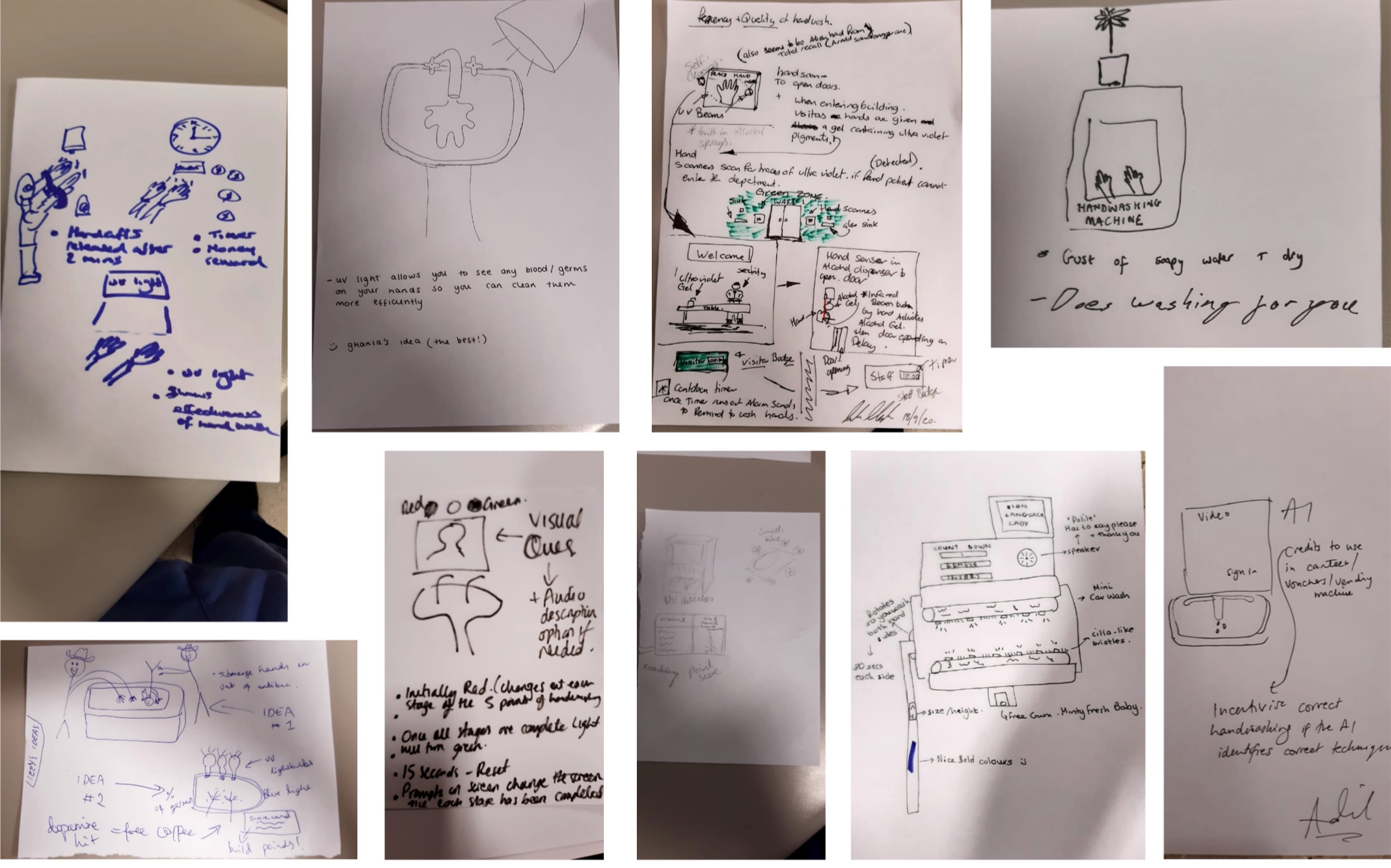
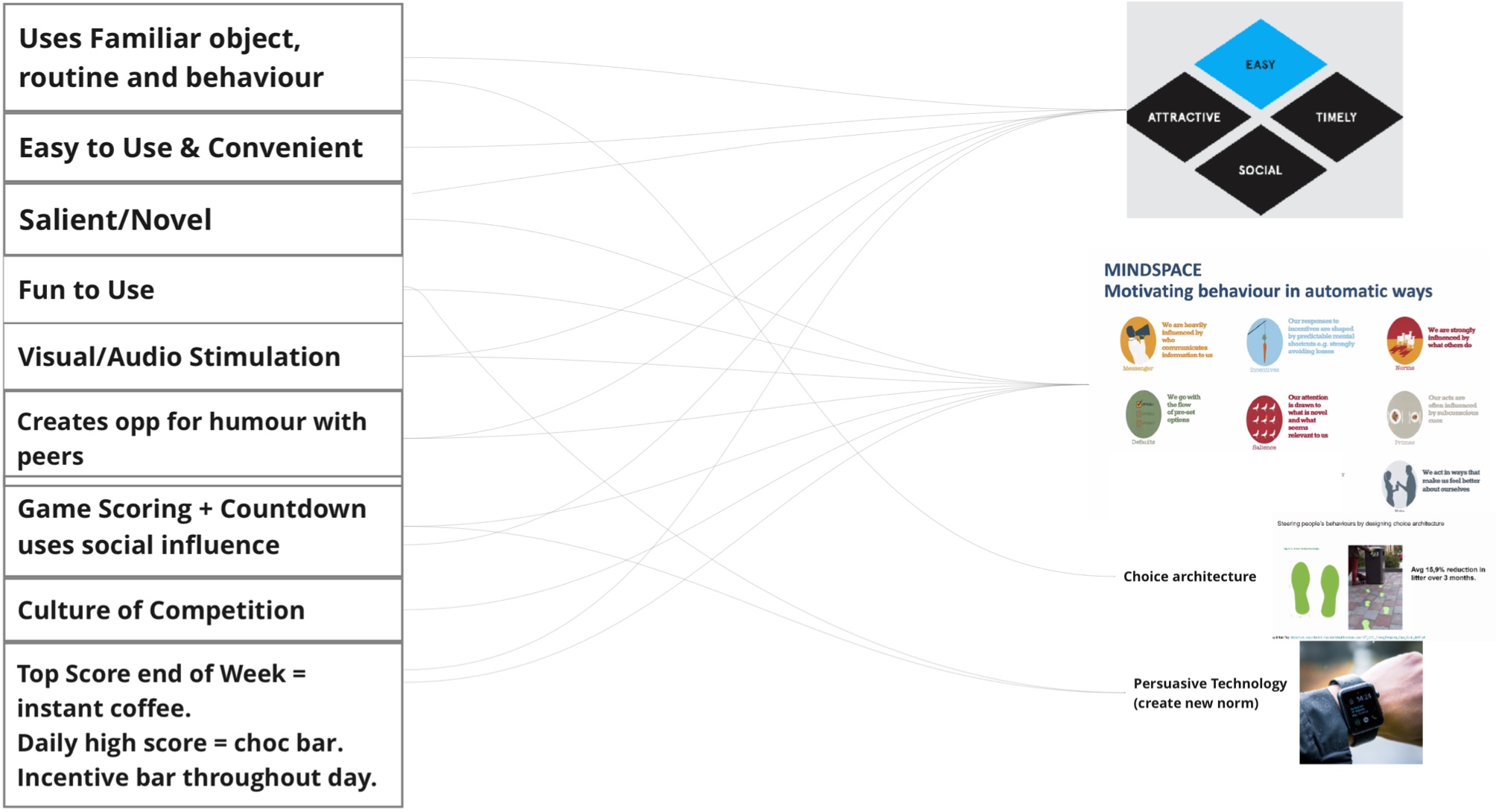
Use an object and routine already present. Do not make someone leave the cart to complete an extra task.
Use visual and audio cues at the ward transition, with enough presence to be noticed without overwhelming the setting.
Friendly competition and a modest reward could make the behaviour feel more like a shared activity than a reprimand.
04 / THE CART-BASED CONCEPT
Doorway stations would ask radiographers to leave and return to the cart; entrance cues would add infrastructure. I centred the concept on the cart instead.
The proposed cart carries the sanitiser, visual stimulus and audio cue. A ward transition starts a short response window; using the dispenser stops the cue and gives positive feedback.
Cues needed to reach radiographers without disturbing patients. Varying light patterns aimed to counter familiarity and disengagement.
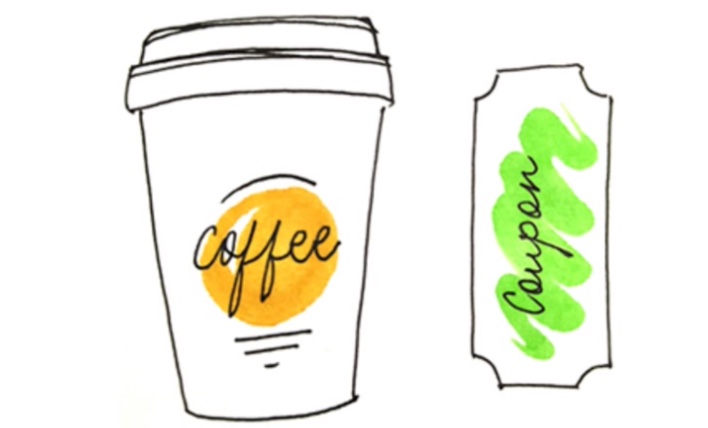
A backstage score creates an element of friendly competition, with a cup of coffee or a coffee coupon at the end of the week.
Under the proposal, points would require a new ward transition, not stationary or repeated dispensing. That anti-gaming safeguard remained untested.
01 / IDENTIFY
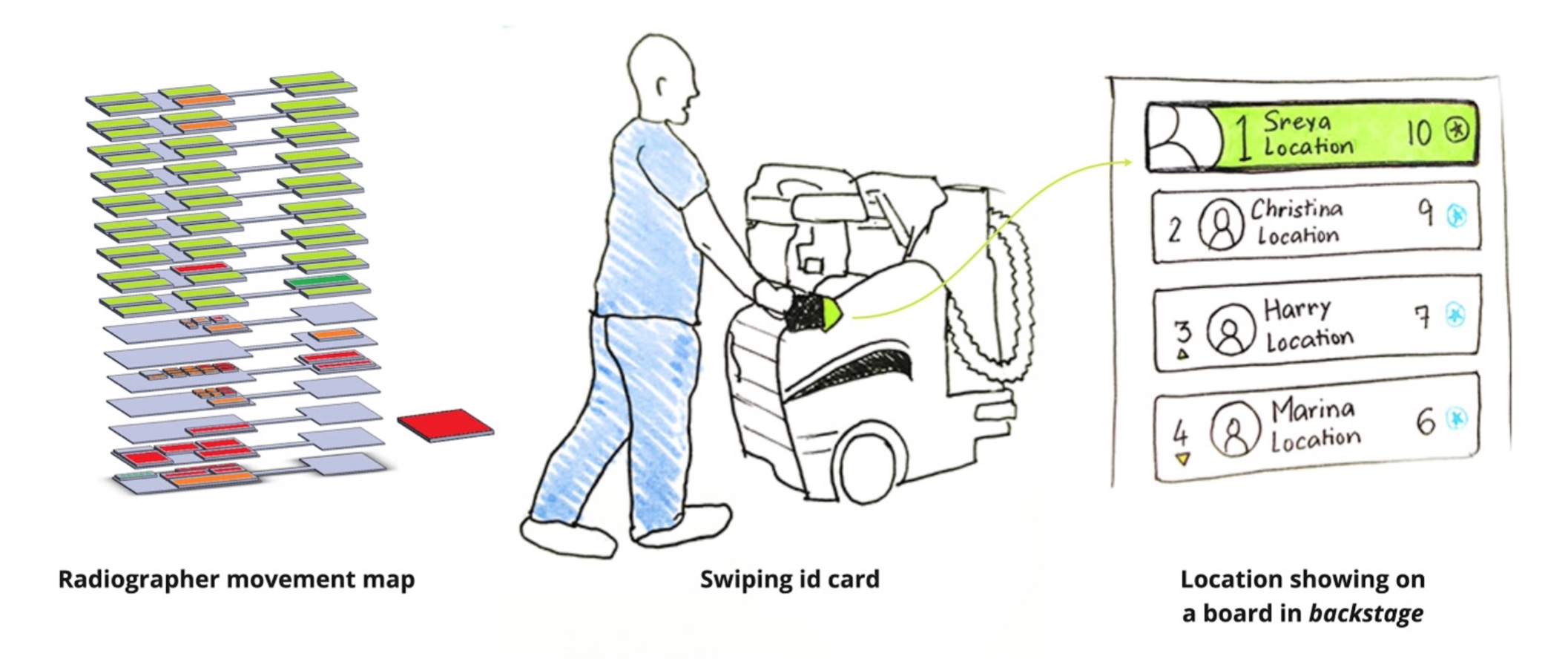
The storyboard begins with the radiographer’s ID and location, connecting movement through the hospital to a backstage board.
Here, the board remains a concept sketch.
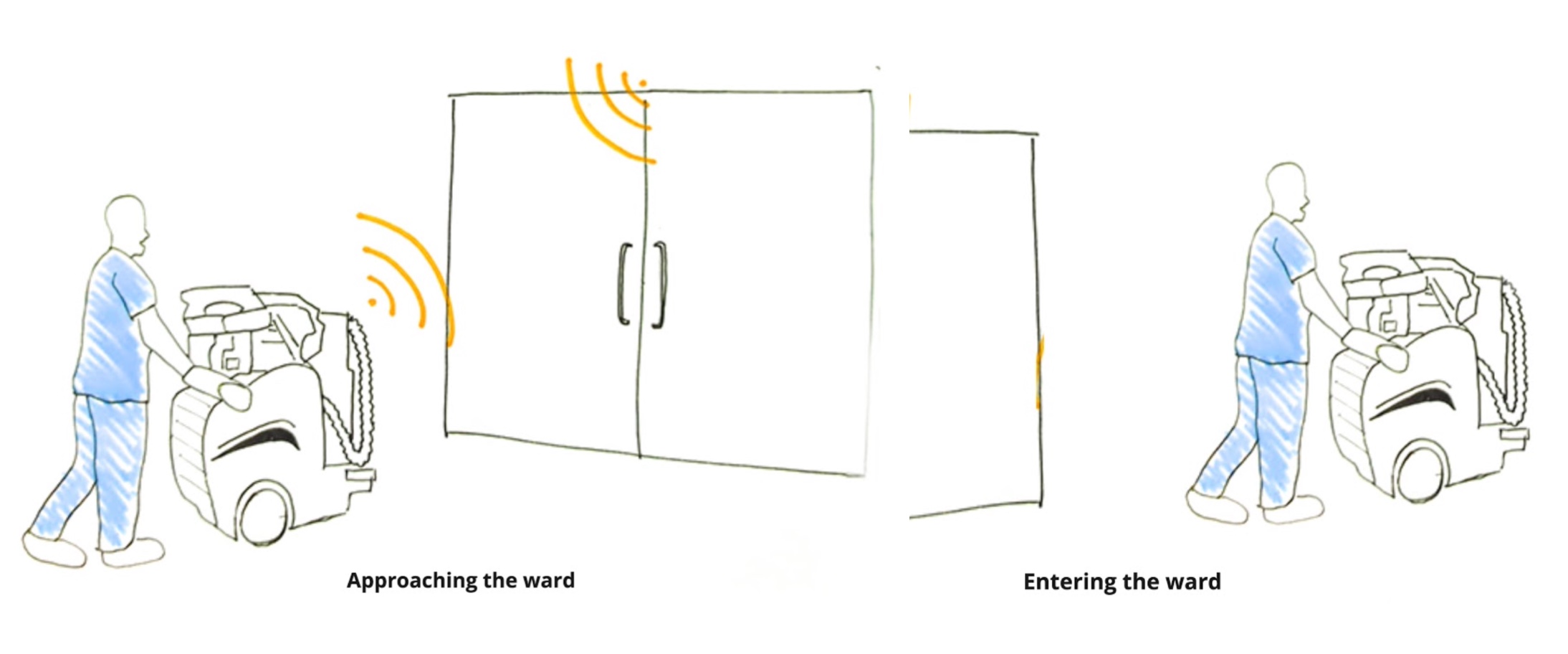
02 / ENTER
Proximity-based door opening aimed to reduce surface contact, with a reminder triggered after entry to the new ward.
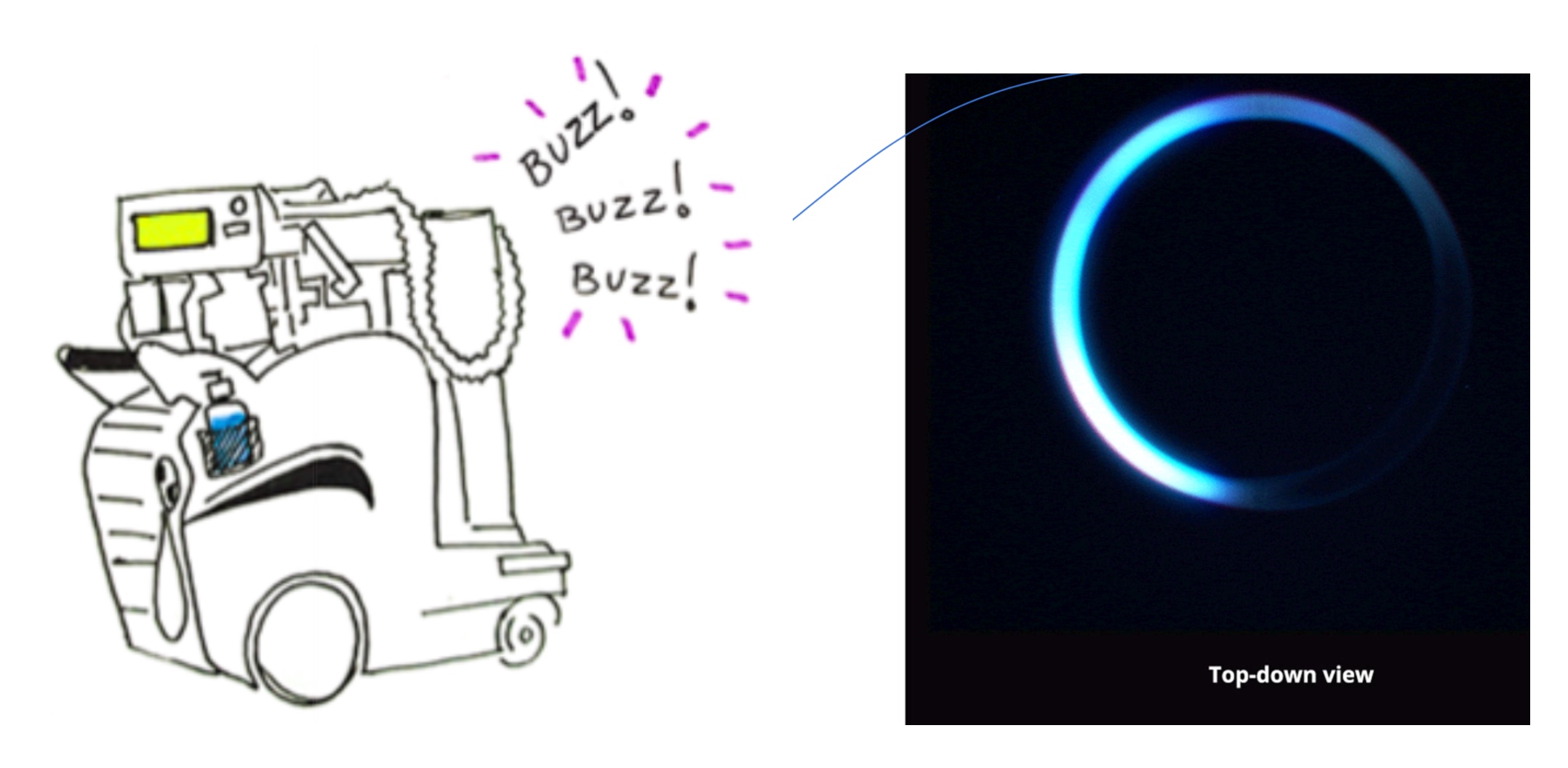
03 / NOTICE
A light around the holder and an audio cue make the next action visible. The cue belongs beside the dispenser, not elsewhere in the room.
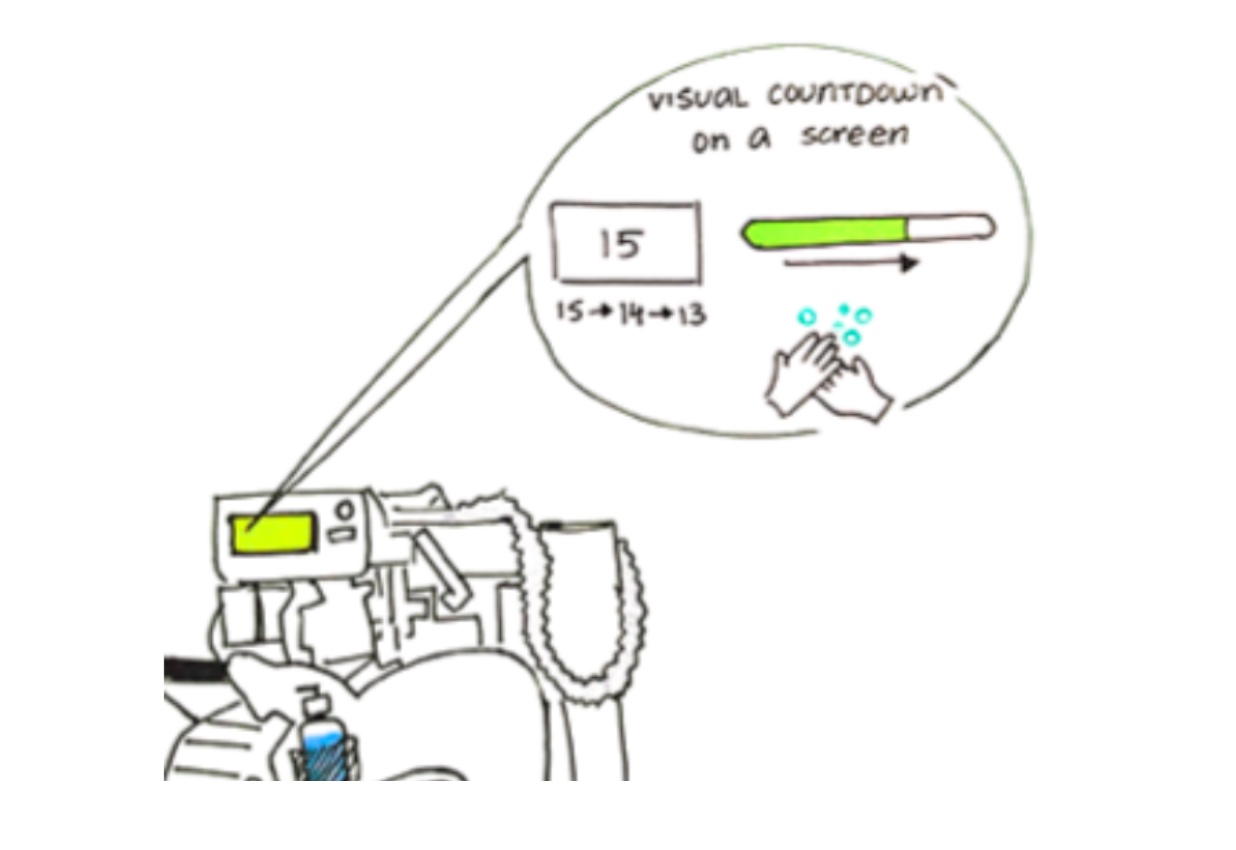
04 / RESPOND
The sketch’s visual countdown marks the concept’s 20-second response window.
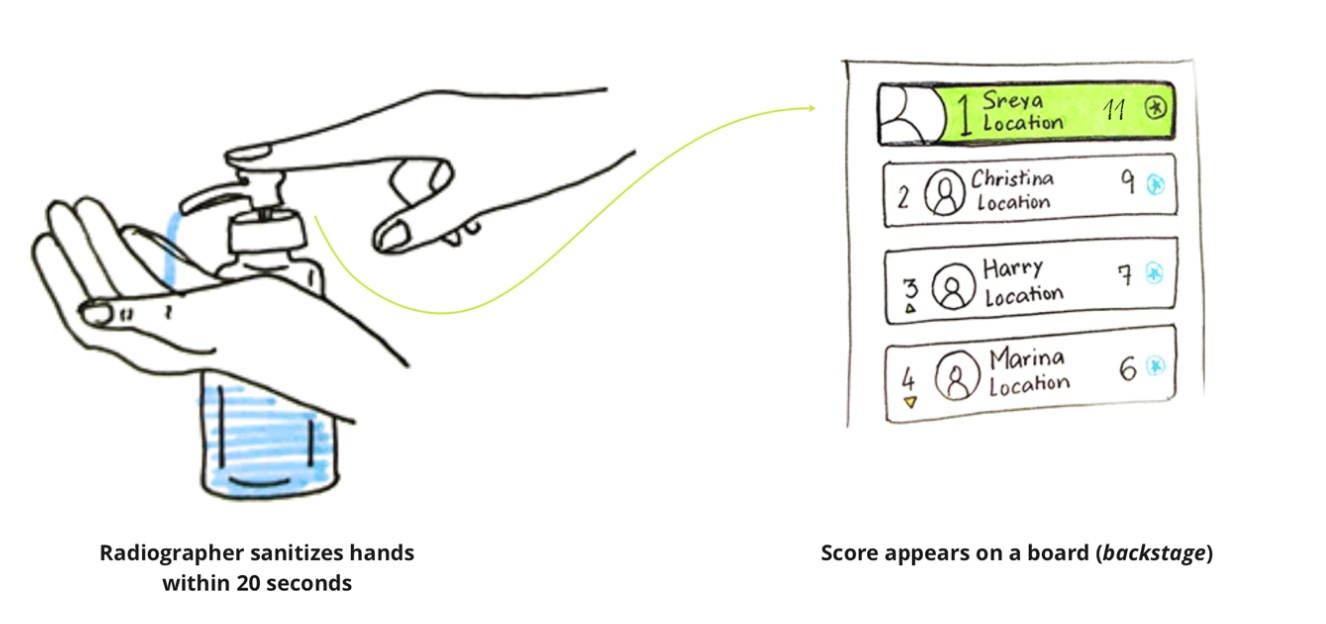
05 / RECORD
Dispenser use stops the cue, plays positive feedback and adds a point in the proposed system. Points depend on a new ward transition, rather than repeated dispensing in one place.
06 / REWARD
A coffee or coffee coupon draws on an existing team ritual. The proposal keeps the reward modest rather than turning a care behaviour into a high-stakes competition.
Original storyboard for the proposed system, not a hospital deployment.
05 / MAKING IT TANGIBLE
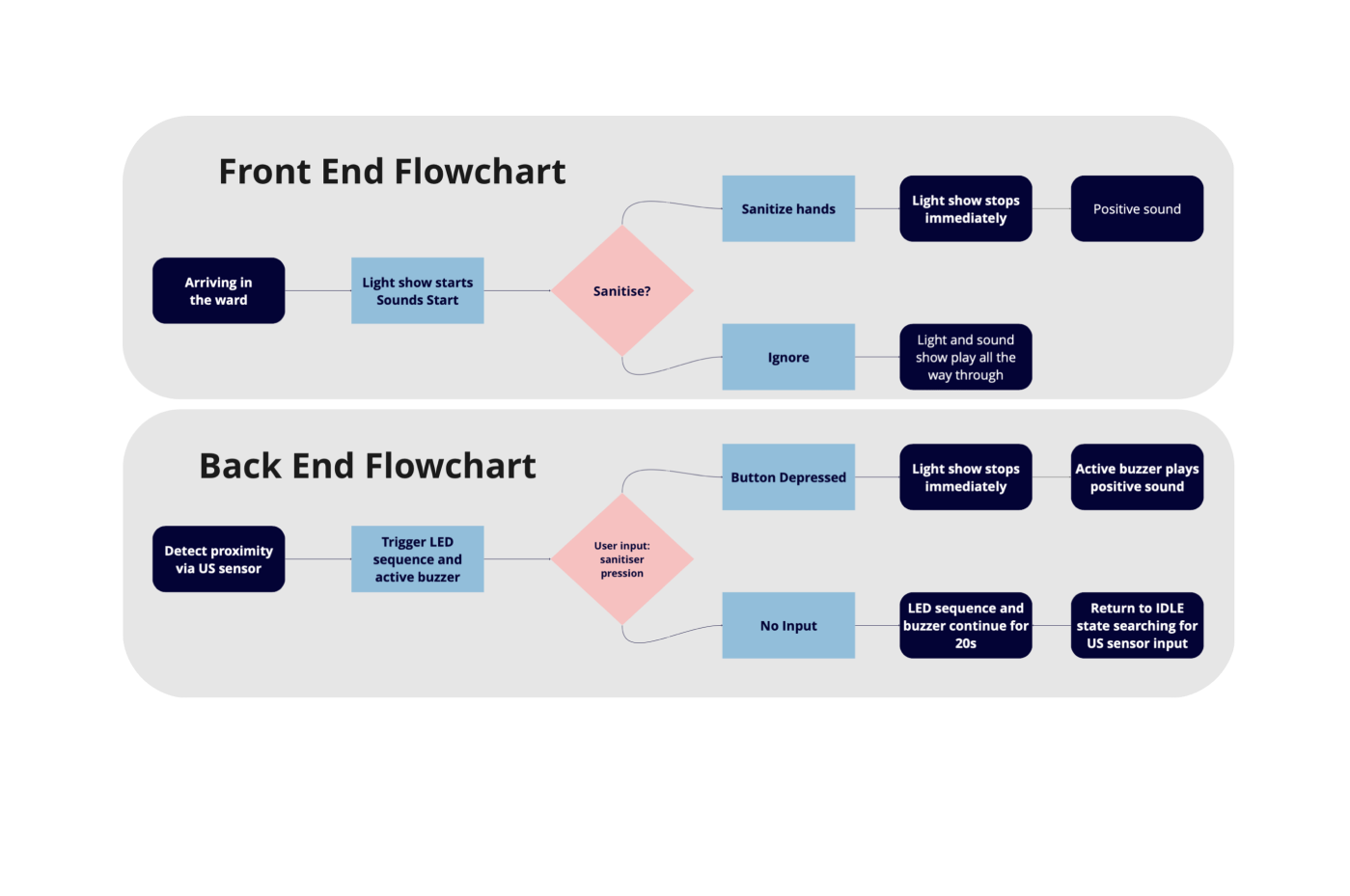
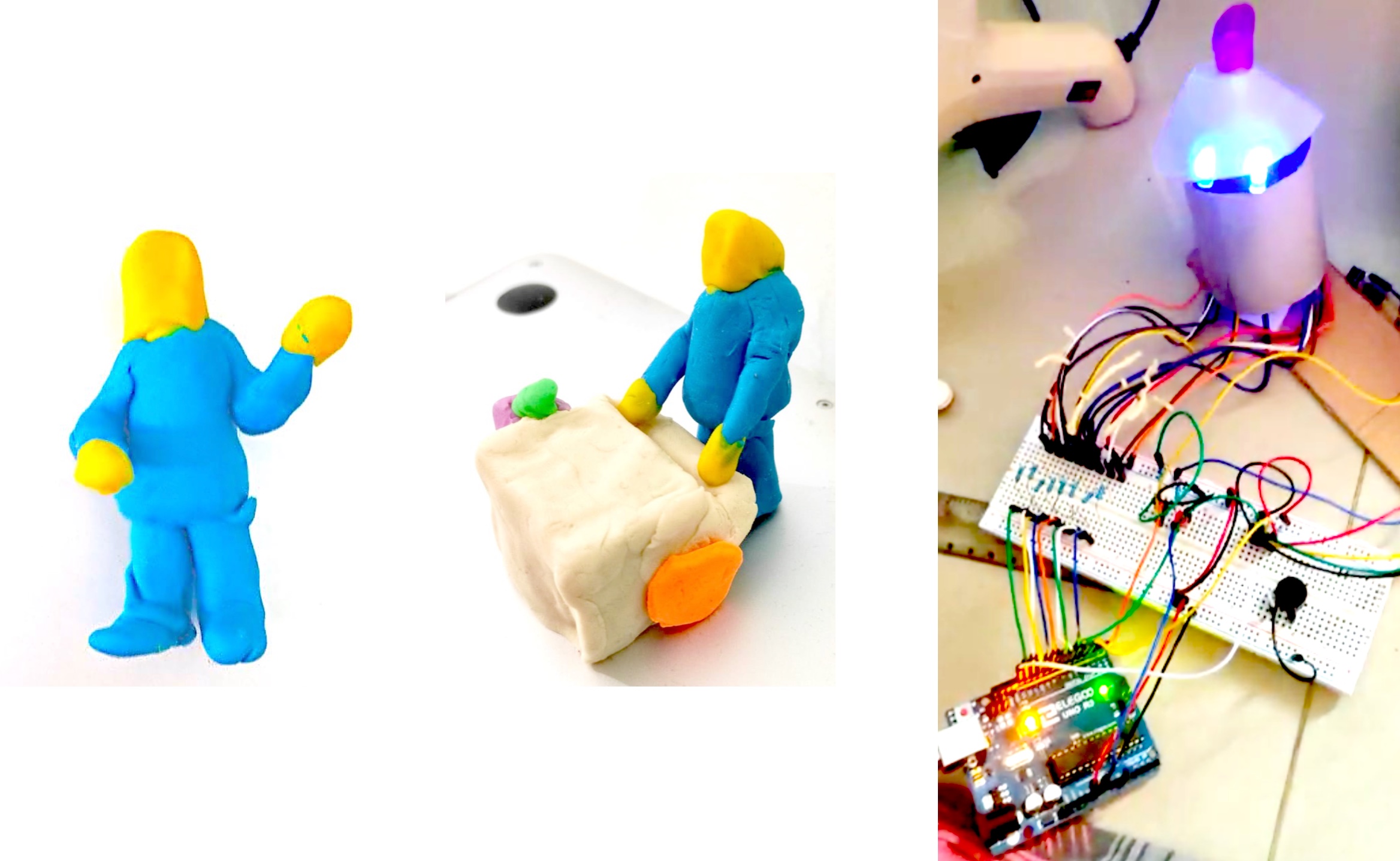
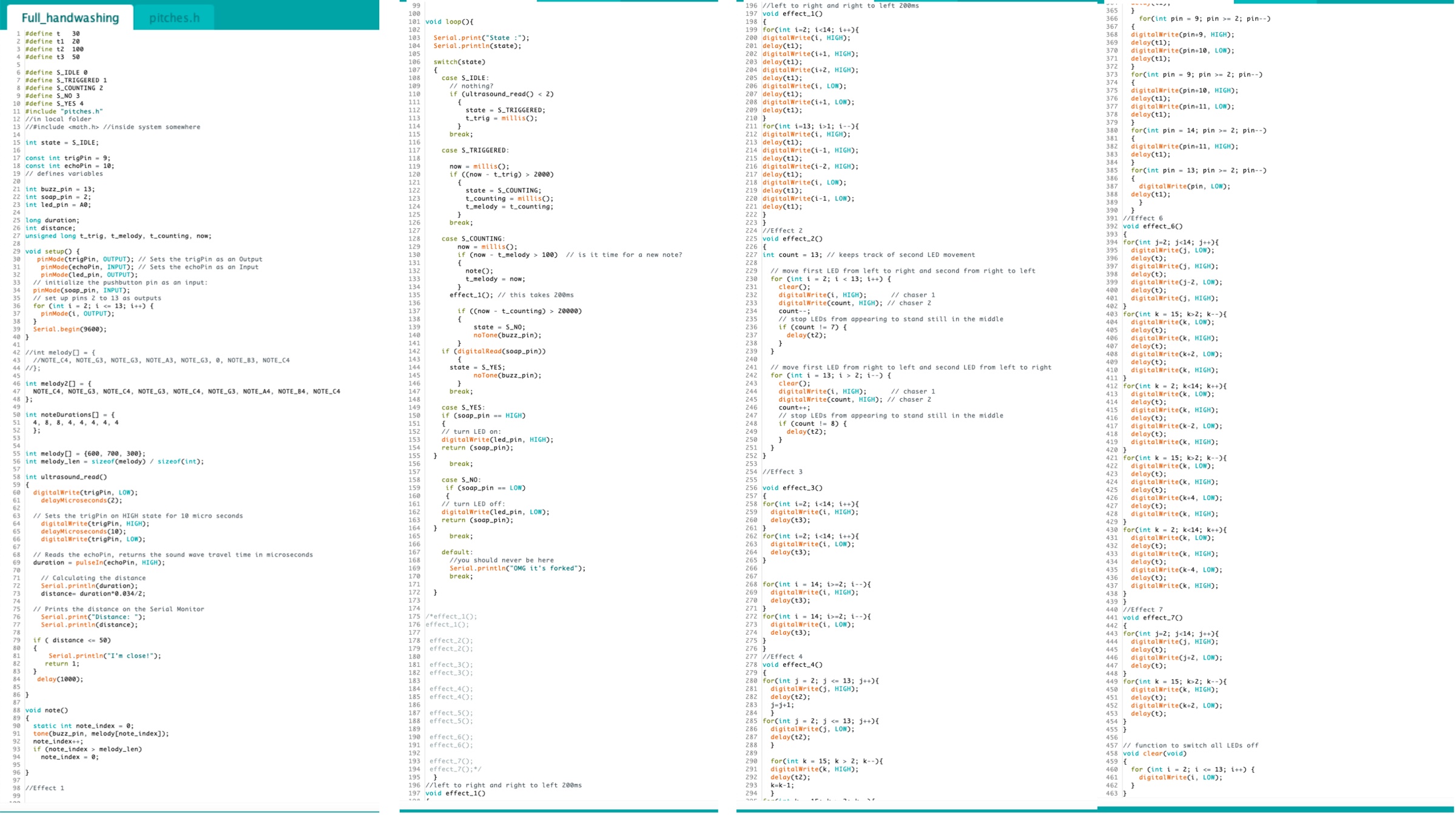
An Arduino prototype and clay scenario made the idea tangible. The electronics demonstrated a trigger, light sequence, dispenser input and audio feedback.
Ward entry, action and acknowledgement became a proximity sensor, LEDs, a buzzer and a button representing dispenser input.
If there is input, the light stops and positive feedback plays. Without input, the cue runs through the response window before returning to an idle state.
I also broke down the wider infrastructure: identity and location, entry detection, timing and animation, dispensing feedback and the scoreboard.
The physical prototype invited discussion; hospital network, door and central scoreboard integration remained unproven.
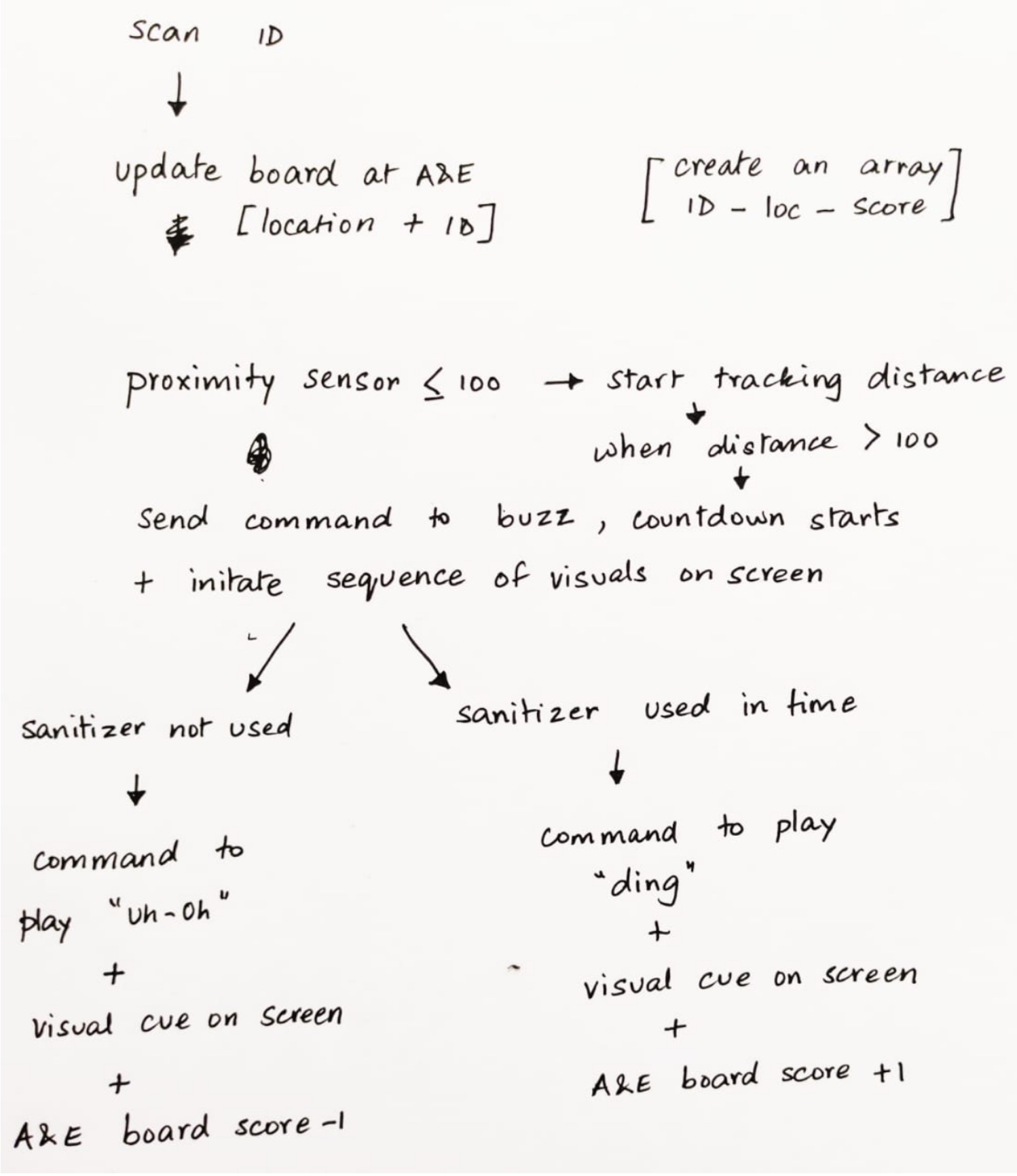
The early back-end sketch connects ID, location and score to the trigger and feedback logic. It also explores what happens when the sanitiser is not used.
It includes positive and negative scores as exploratory branches, not a tested incentive policy.
The front-end and back-end flowchart focuses on positive acknowledgement and a return to idle. The artefacts do not establish which scoring policy was finally tested.
06 / WHAT WAS AND WAS NOT LEARNED
I shared the concept and videos remotely with radiographers and doctors in India and the UK. The response was positive, but the physical setup was not present during that feedback.
“Draws attention.”
Junior radiographer in the UK, responding remotely to the concept.
That suggested noticeability, not more frequent hand cleaning, protocol adherence or reduced cross-contamination.
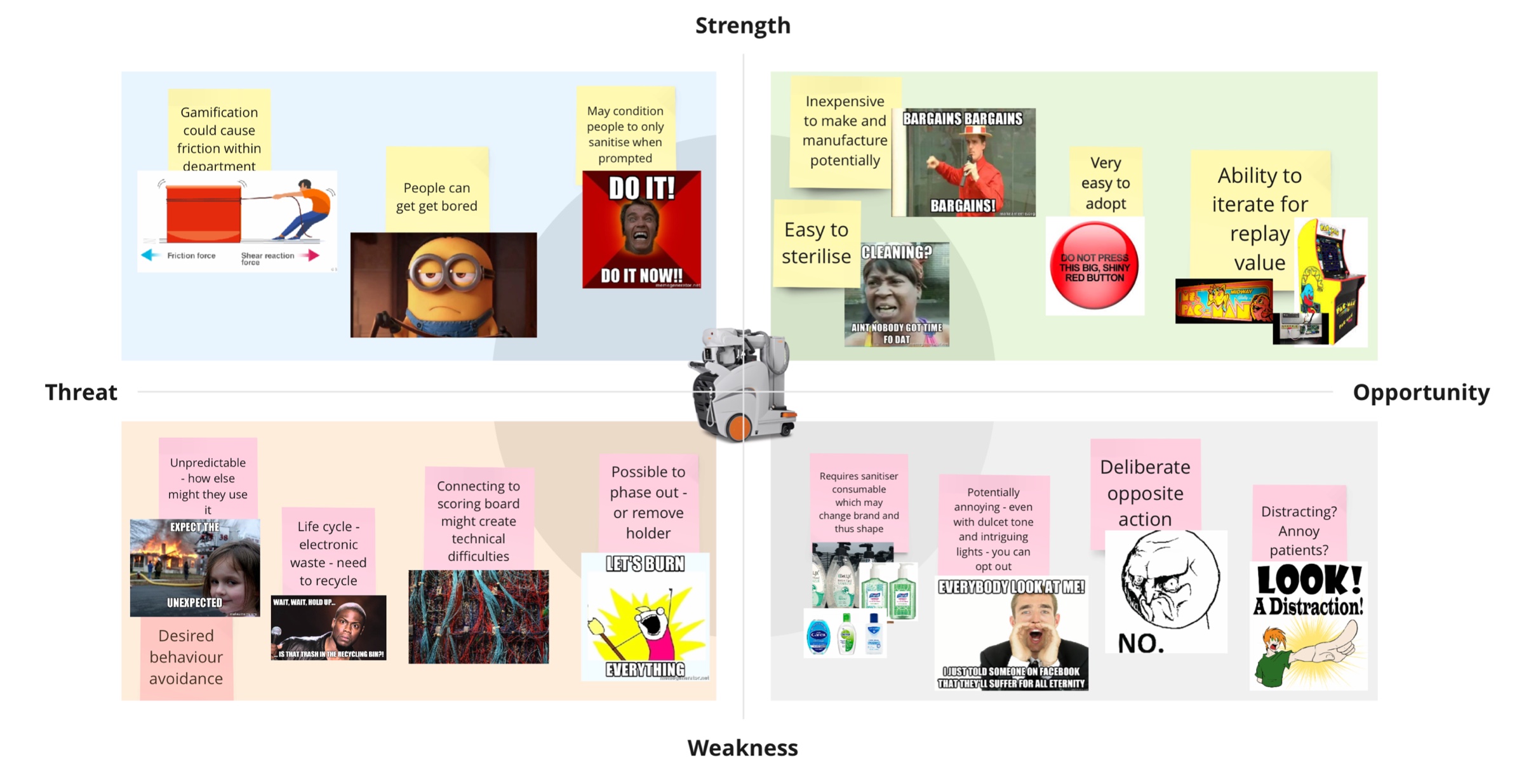
A SWOT review helped me look beyond the appeal of the prototype to the ways it could fail in everyday use.
People might get bored, find the cues annoying or learn to wait for a prompt. Patients could also find the system distracting.
Friendly scoring could create friction, avoidance or unexpected ways of using the system. The intended culture is not a guaranteed outcome.
Sanitiser containers can change. Scoreboard integration can be difficult. Electronics add maintenance and eventual waste to the design.
The next step was thorough usability testing with the physical setup and actual users in the hospital context. The costs of equipping carts and providing rewards also needed evaluation.
Scaling would require understanding the hospital network and changes to daily routines, then adapting the approach for other staff and equipment rather than assuming one solution fits everyone.
Working with a familiar object at a specific moment was the key decision. Research, co-creation and prototyping grounded it beyond a general reminder.
This remains a proof of concept; adherence and infection outcomes were not measured.
OTHER QUESTIONS IN HEALTHCARE