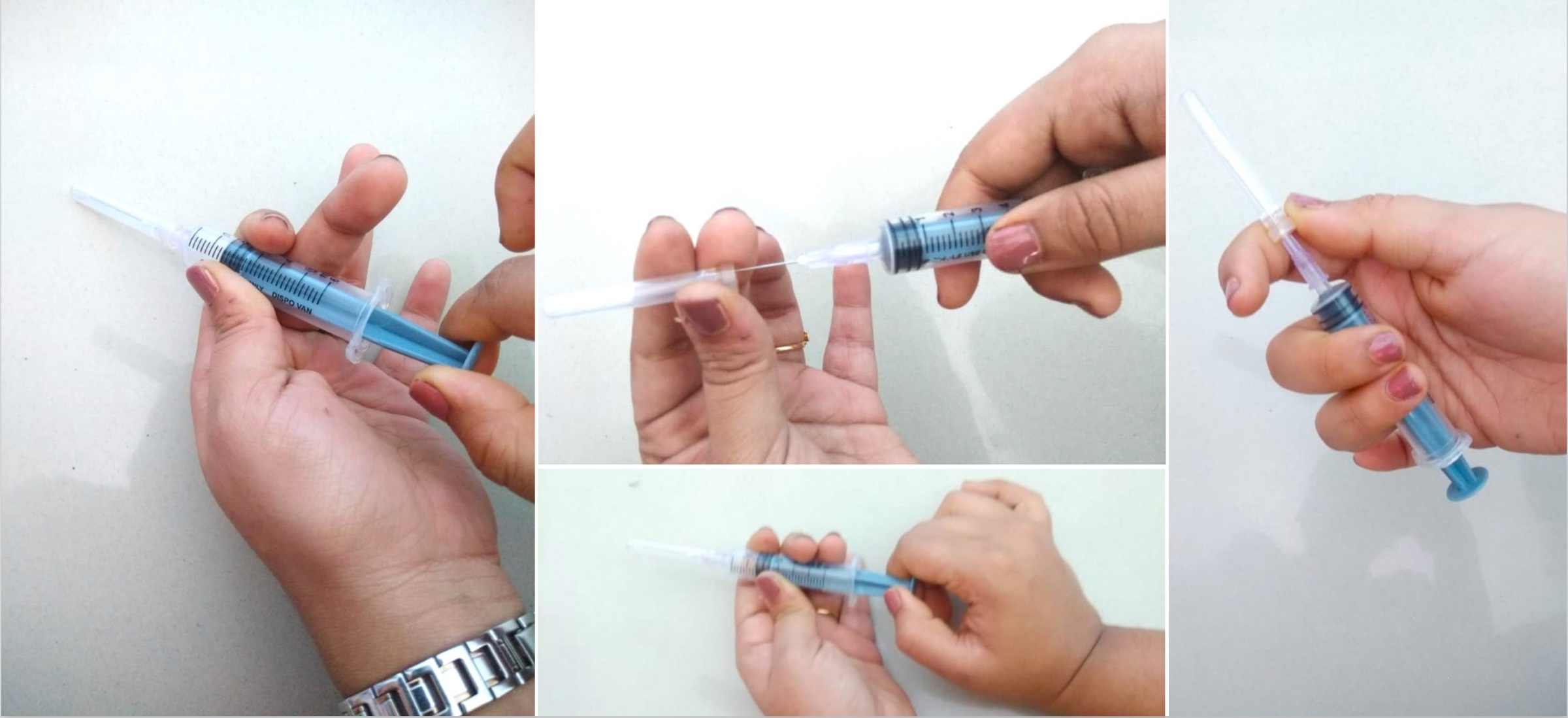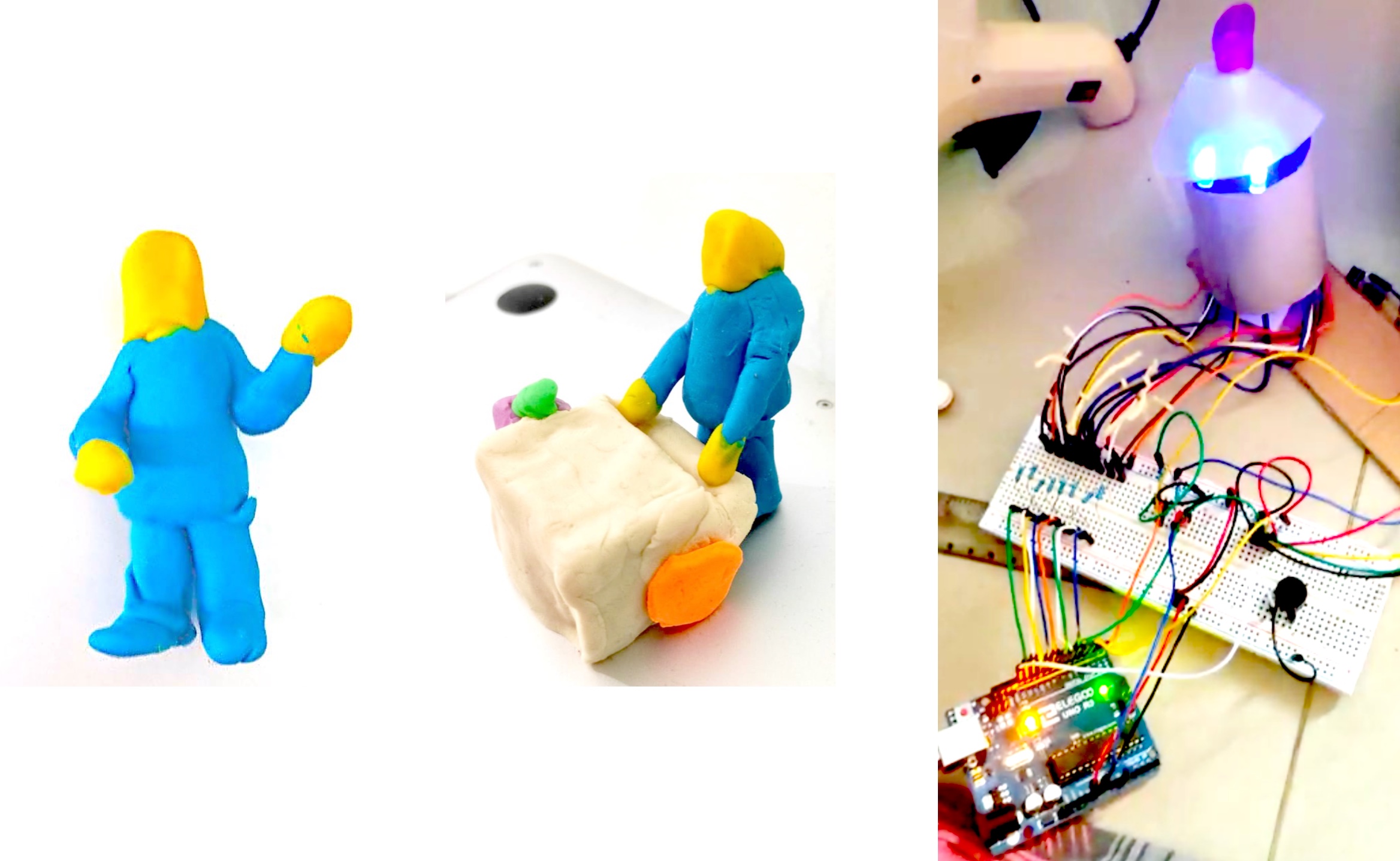
At the source.
Segregation and the right container matter at the source. Mistakes travel downstream, putting waste handlers at risk.
Some interactions could not load. The story and full-size image links are still available.
SYSTEMS DESIGN / MEDICAL WASTE
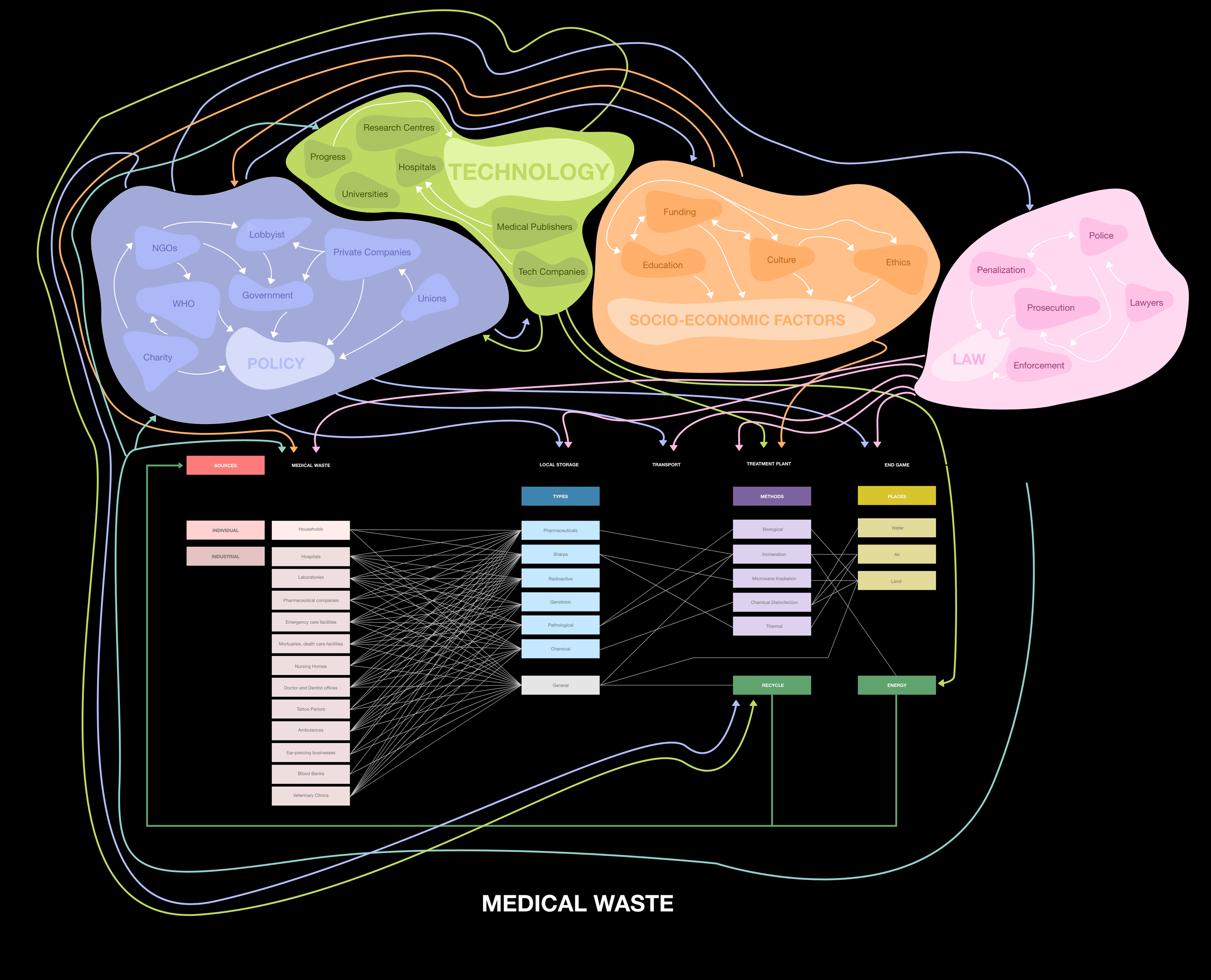
I mapped medical waste from its sources to its environmental consequences. My question shifted from better disposal to why the system creates so much waste.
01 / THE QUESTION
“Do no harm” is a healthcare principle. Yet care creates waste and pollution. I approached that tension as a systems problem, not a better-bin brief.
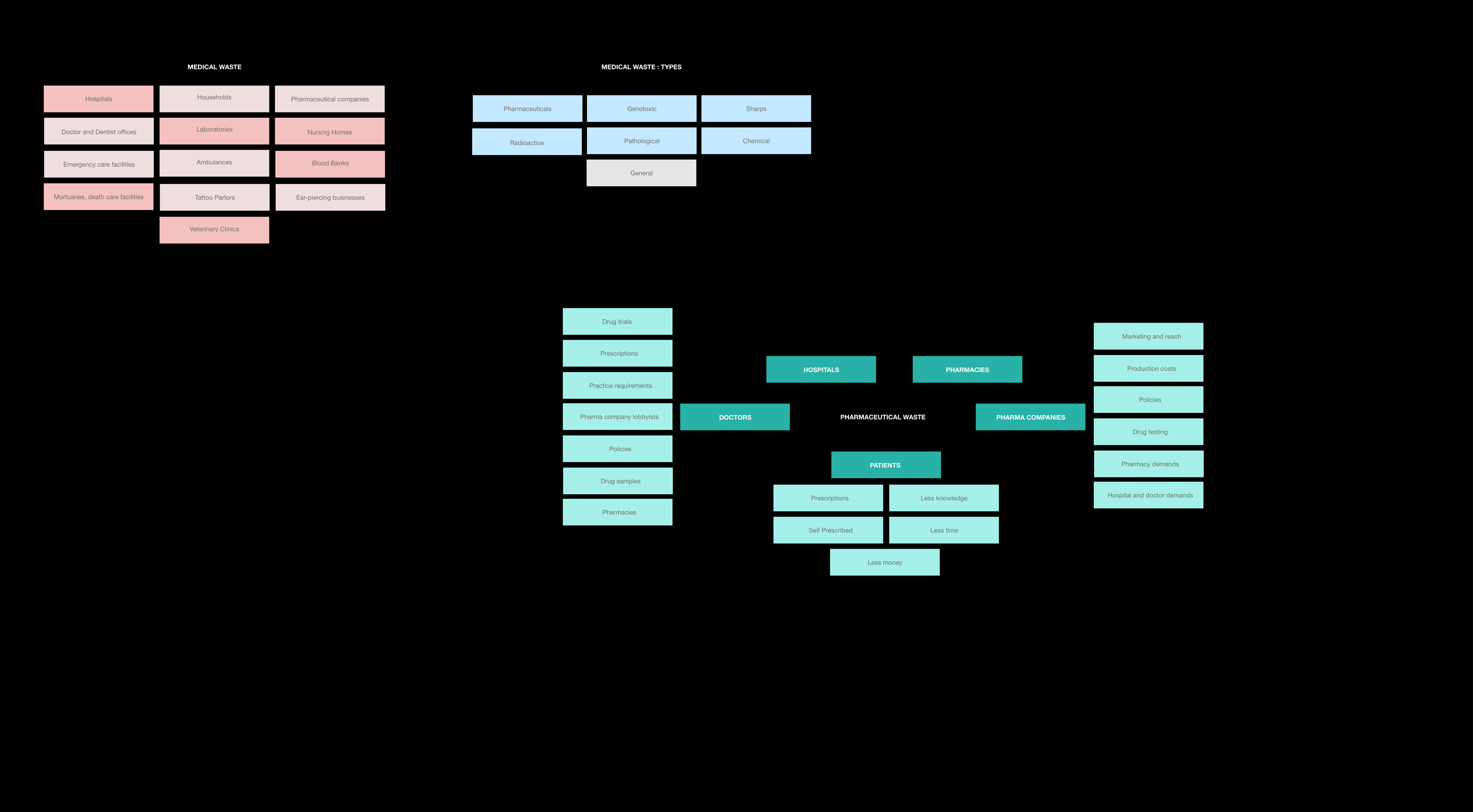
Beyond hospitals, I mapped households, laboratories, pharmacies, pharmaceutical companies, emergency services, nursing homes and veterinary clinics.
Sharps, dressings, diagnostic samples, chemicals, pharmaceuticals, medical devices and radioactive waste cannot be handled as one stream.
The study’s background estimate was about 85% general waste and 15% hazardous waste. That framed the problem without making general waste consequence-free.
I wanted to understand the full lifecycle: what generates the waste, how it moves, what treatment changes, and what still reaches land, air or water.
These proportions are cited background context, not project measurements.
02 / FOLLOWING THE WASTE
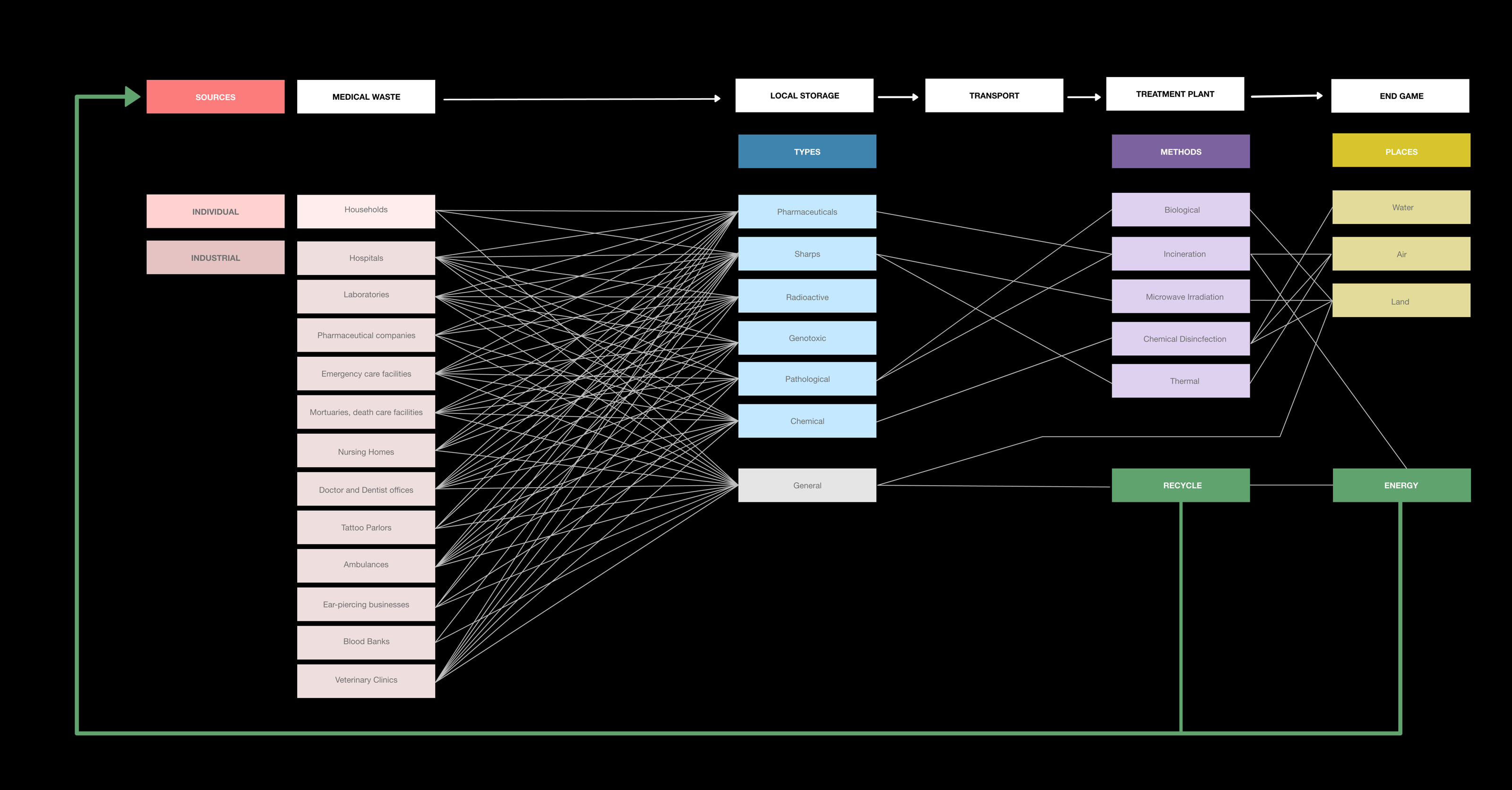
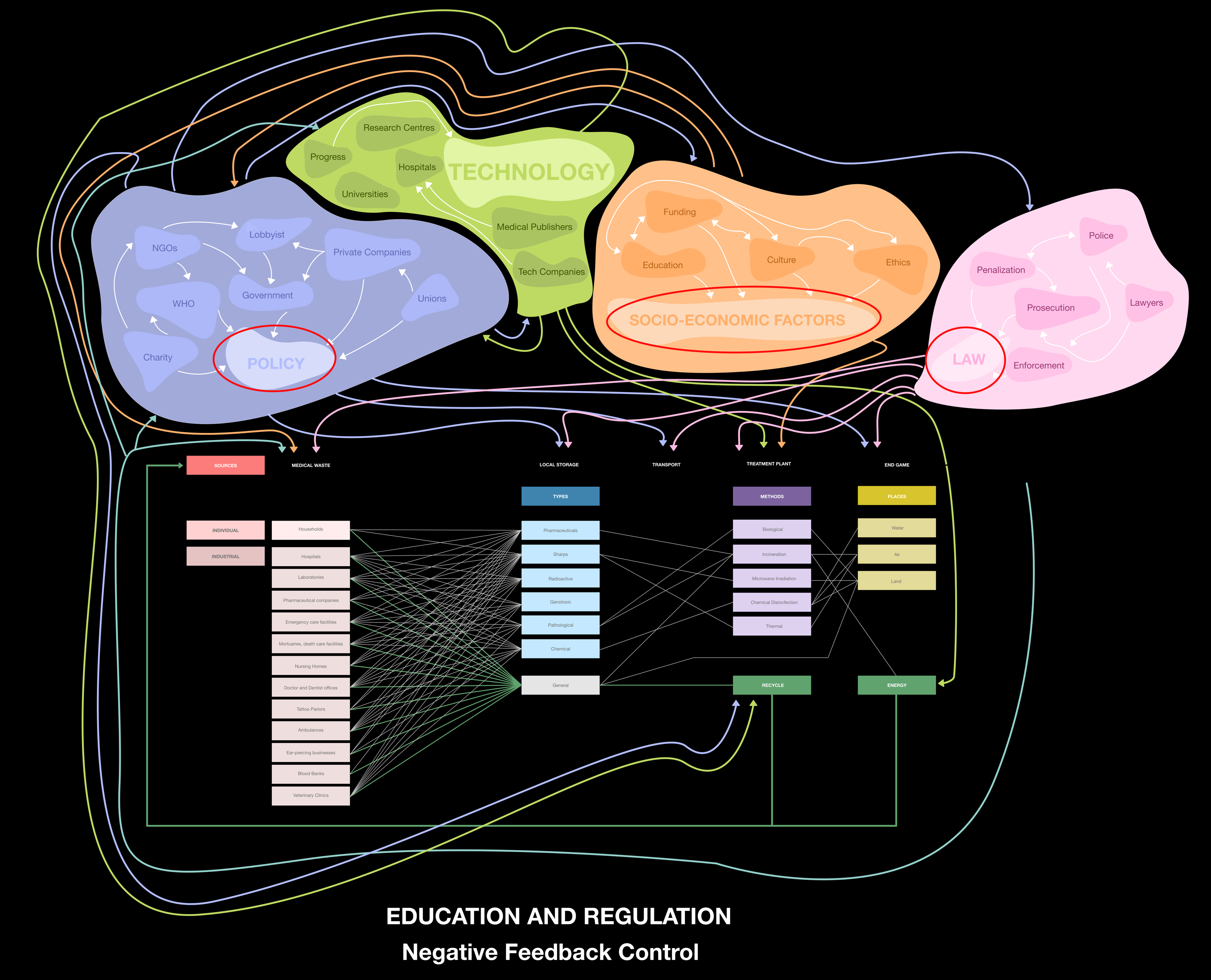
Following collection, storage, transport and treatment through to their destinations exposed the limits of an end-of-pipe solution.
Segregation and the right container matter at the source. Mistakes travel downstream, putting waste handlers at risk.
Waste waits for processing and moves between sites. Storage, access and transport are part of the design problem, not invisible steps between disposal and treatment.
Decontamination changes the waste, but does not make its environmental consequences disappear. I traced treatment routes through to their eventual destinations.
Policy and law set rules and incentives. Technology affects the available treatment methods. Funding, education and culture influence what people and institutions can actually do.
I explored how recovery, recycling and treatment might change the loop. These maps locate possible interventions, not quantified energy or pollution savings.
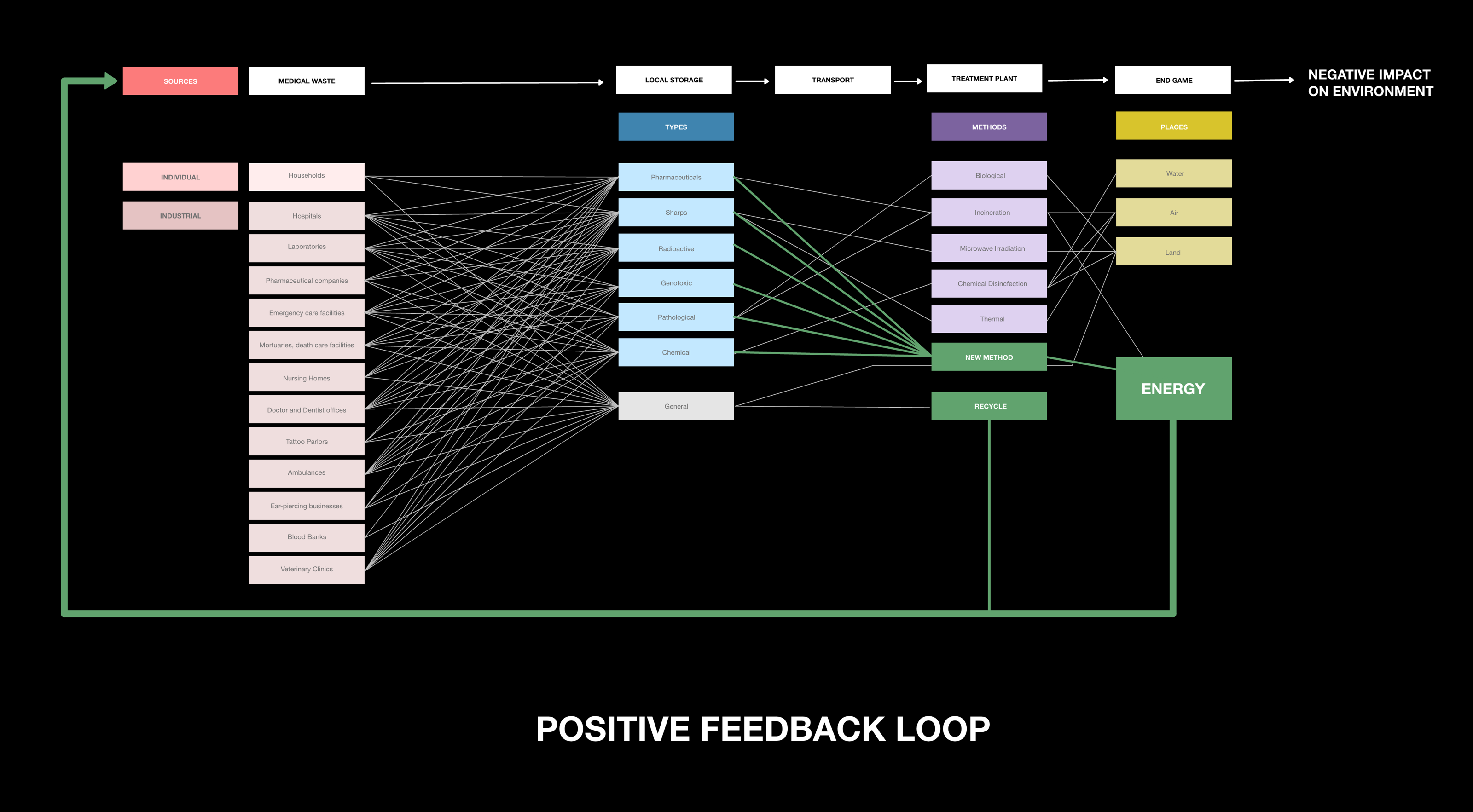
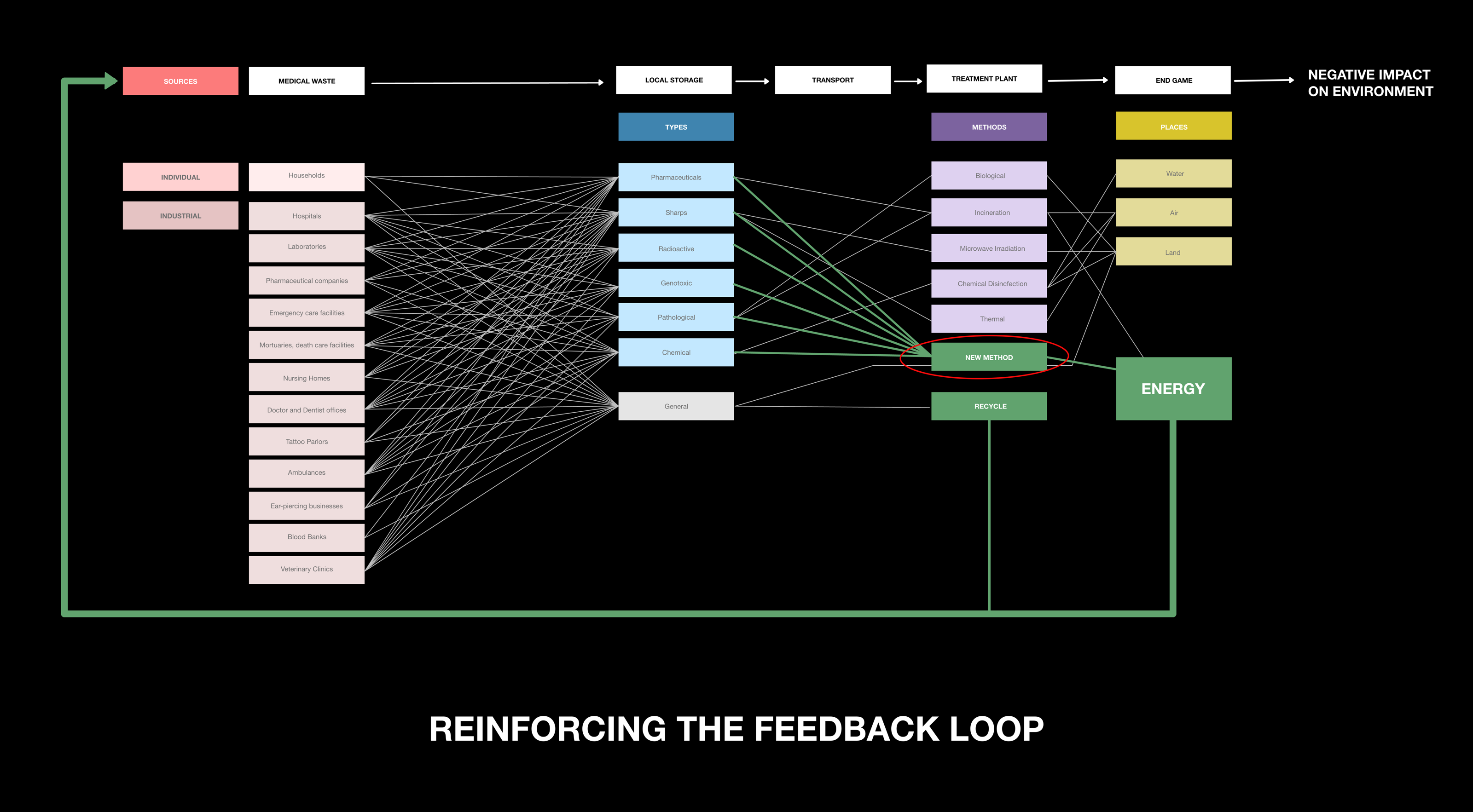
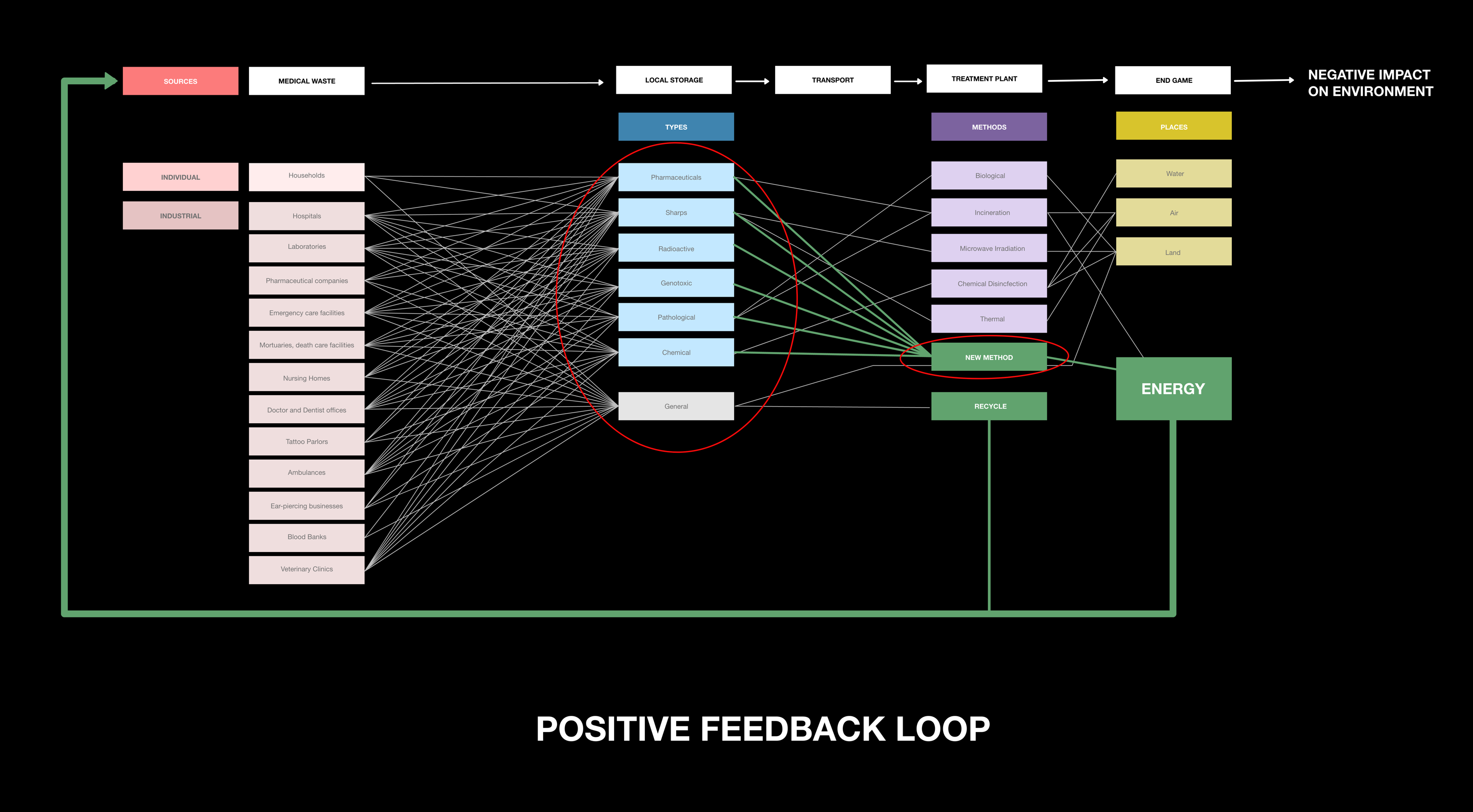
03 / A SMALLER PART OF THE SYSTEM
I narrowed the inquiry to pharmaceutical waste, looking beyond expired-drug disposal to demand, prescribing, supply and accumulation.
Patients, doctors, hospitals, pharmacies and pharmaceutical companies each influence what is bought, prescribed, stocked and discarded. Those decisions are interconnected.
How could we reduce overbuying, hoarding and unused stock while preserving necessary care and emergency supplies?
This moved the work upstream. I considered need-based access to medicines, prescription practices, diagnostic processes and the materials used in everyday hospital administration.
Prescribing needed closer research with doctors and hospitals: which medicines are needed, why one is chosen, how often conditions occur and where alternatives fit.
I explored timely access to medicines as an alternative to accumulating stock that expires. Emergency availability remains part of that question.
Diagnostics and paper-based triage offered ways to reduce material consumption through service changes.
Education, commercial influences and distribution policies all belong in the picture. I treated these as areas for further study, not a single behavioural fix.
04 / FINDING LEVERAGE
The maps helped me compare interventions at different depths: materials and treatment, information and feedback, policies and the purpose of the system itself.
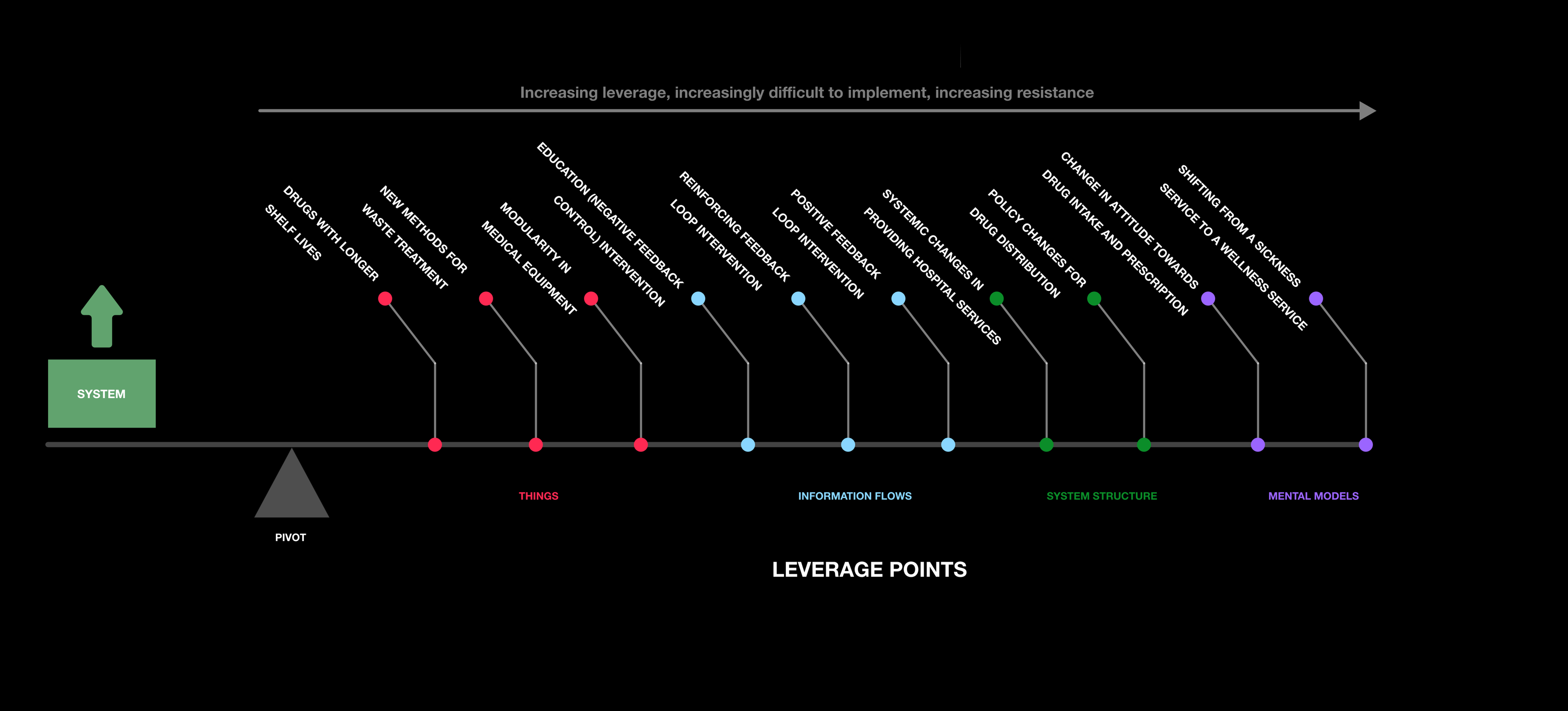
I used Meadows’ leverage points to organise the possibilities. A longer shelf life or a new treatment method changes a thing in the system. Information, prescribing rules and distribution policies change how the system operates. A shift from treating sickness towards supporting wellness questions its larger goal.
Drug shelf life, treatment methods and modular medical equipment offer concrete intervention points.
Feedback, education, hospital services and distribution policies influence the flow long before disposal.
Preventing illness changes the demand on the whole system, rather than improving one downstream stage.
05 / WHAT THE MAP MADE CLEAR
I began after materials became waste; I ended with purchasing, prescribing, service delivery and prevention.
Making relationships visible helped me choose a specific question, rather than expect one product to solve the system.
Next steps included shelf life, production and consumption, equipment reuse and recycling, prescribing and distribution policy, always alongside access to care.
This systems inquiry produced no deployed intervention or measured reduction in waste, cost or environmental harm.
OTHER QUESTIONS IN HEALTHCARE